
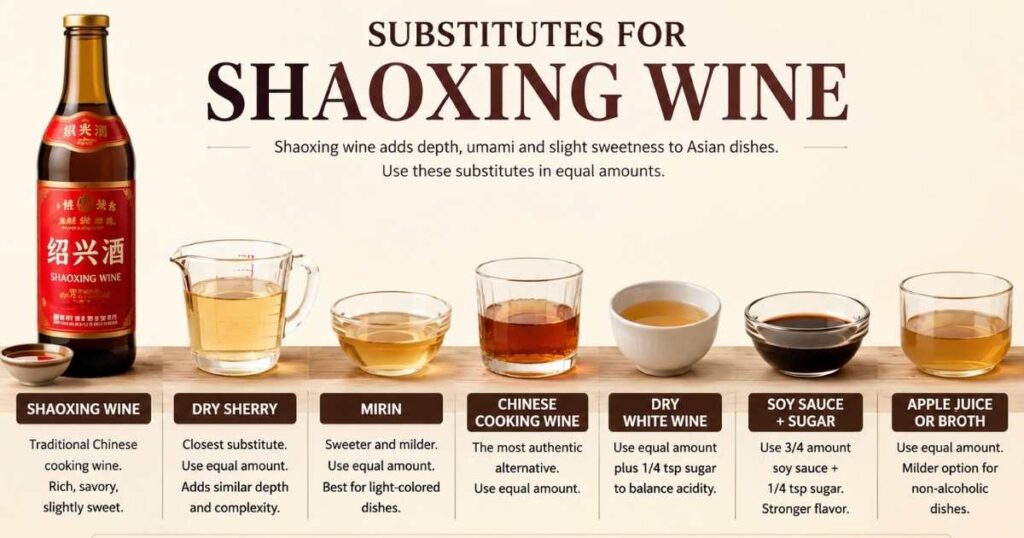
Running out of Shaoxing wine mid-recipe is more common than you’d think, especially if you don’t live near an Asian grocery store. The good news is that finding reliable substitutes for Shaoxing wine isn’t as hard as it seems, once you understand what this ingredient actually does in a dish.
From dry sherry to sake, several pantry staples can replicate its nutty depth and odor-neutralizing power. This guide walks through the best substitutes for Shaoxing wine, exact swap ratios, and the rare dishes where nothing else will do. You’ll never stall a stir-fry again.
What is Shaoxing Wine?
Shaoxing wine (shàoxīng jiǔ, 绍兴酒) is a traditional Chinese rice wine named after the city of Shaoxing in Zhejiang province, where it’s been produced for centuries. Unlike clear rice wines such as Japanese sake, Shaoxing is a “yellow wine” (huángjiǔ) brewed from glutinous rice, water, and a wheat-based fermentation starter called qū. That wheat content also means it’s not gluten-free.
In Chinese cooking, Shaoxing wine does two jobs at once:
- De-odorizing (qùxīng, 去腥): Its alcohol and mild acidity cut through the fishy or “gamey” smell in raw meat, poultry, and seafood.
- Flavor building (zēngxiāng, 增香): Its nutty, faintly sweet, oxidized character adds depth to braises, stir-fries, and marinades the flavor most people describe as the “soul” of a dish.
Most bottles sold outside China are labeled “cooking wine” and contain added salt, which lets stores sell them without a liquor license. Keep that in mind if you’re swapping in a substitute that isn’t salted.
The Flavor Structure of Shaoxing Wine
Before picking a stand-in, it helps to know what you’re actually trying to replace. Here’s the flavor profile broken down:
| Feature | Description |
| Alcohol content | Roughly 14%–18% ABV |
| Acidity | Mildly acidic, which helps break down meat fibers during marinating |
| Aromatics | Nutty and earthy, with notes that resemble dry sherry or light caramel |
| Salt (store-bought) | “Cooking” versions typically carry 1.5%–2% added salt |
A good substitute doesn’t need to check every box but the closer it gets to this profile, the less you’ll need to adjust the rest of the recipe.
Top 5 Substitutes for Shaoxing Wine
These five options are ranked by how closely they replicate Shaoxing’s chemistry and aroma, not just its general “wine-ness.”
1. Dry Sherry (The Professional Standard)
Dry sherry is the substitute most chefs reach for first. It’s also an oxidized, fortified wine, which gives it a similar nutty backbone to Shaoxing.
- Best for: Stir-fries, braises, and marinades
- Watch out for: Cream or sweet sherry the added sugar can burn in a hot wok
- Ratio: 1:1
2. Japanese Sake
Sake is a clear, unoxidized rice wine, so it won’t bring Shaoxing’s deeper “brown” notes, but it’s excellent at neutralizing raw meat odor.
- Best for: Seafood and lighter stir-fries
- Tip: Stir in a pinch of brown sugar to mimic Shaoxing’s caramel undertone
- Ratio: 1:1
3. Dry White Wine
A crisp dry white think Sauvignon Blanc or Pinot Grigio works as a last-resort swap, especially in recipes that only call for a tablespoon or two.
- Best for: Quick stir-fries or steaming
- Avoid: Aromatic or fruity styles like Riesling or Moscato, which clash with soy sauce and ginger
- Ratio: 1:1
4. Gin (The High-ABV Alternative)
It sounds unusual, but gin’s high alcohol content and botanicals make it genuinely effective at masking raw meat smell.
- Best for: Heavier pork or beef marinades
- Adjustment: Use about half the amount called for, since gin runs 40%+ ABV
- Skip it for: Delicate soups or light sauces, where the juniper flavor will dominate
5. Alcohol-Free: Chicken or Mushroom Stock
If you’re avoiding alcohol entirely, a good stock plus a touch of acidity gets you most of the way there.
- Best for: Braised dishes
- Formula: For every 1 tablespoon of Shaoxing wine, use 1 tablespoon of stock plus ½ teaspoon of Chinese black vinegar or lemon juice
- Vegetarian tip: Mushroom stock has more savory depth than plain vegetable stock
Related POST: Fujian Stir-Fried Rice Noodles (Chao Mifen, 炒米粉)
When a Substitute Will NOT Work
There are a couple of situations where swapping out Shaoxing wine changes the dish more than you’d expect:
- Drunken chicken (zuì jī): Here, the wine isn’t a background flavor it’s the main event, often used by the cupful. No substitute reproduces the specific aged, medicinal character of a good Shaoxing in that quantity.
- High-heat wok searing: If you’re chasing wok hei at home, non-alcoholic substitutes fall short. Alcohol evaporates fast at high heat and helps sear the dish quickly; juice or stock behaves differently and can leave your stir-fry watery instead of seared.
Comparison: Restaurant vs. Home Kitchen
Restaurants and home cooks often aren’t even using the same bottle. Professional kitchens tend to buy a higher-grade Shaoxing wine with more acidity and no added salt, while home cooks typically pick up the pre-salted “cooking wine” version sold at grocery stores.
| Restaurant | Home Kitchen | |
| Typical grade | Higher-grade, unsalted | Pre-salted “cooking” Shaoxing (liào jiǔ) |
| Acidity | More pronounced | Milder |
| Salt adjustment needed | Rarely | Often reduce added salt elsewhere in the recipe |
If you’re substituting with sake, sherry, or white wine none of which are pre-salted you may need to bump up your light soy sauce or salt slightly to keep the dish balanced.
Common Mistakes to Avoid
- Reaching for rice vinegar. This is the most frequent slip-up. Vinegar is an acid, not a wine, and using it 1:1 will make your dish sour instead of savory.
- Using mirin without adjusting sugar. Mirin is noticeably sweeter than Shaoxing wine. If you sub it in, cut back on any sugar the recipe calls for, or the dish will taste candied.
- Skipping the wine altogether. You can leave it out, but raw meat may keep a “gamey” edge. If you’re out of every substitute, lean harder on ginger and proper slicing technique to offset the smell.
FAQ
Can I use bourbon or whiskey instead of Shaoxing wine?
Yes, but they’re much stronger use about a third of the amount and expect a smoky, woody note in the finished dish.
Is Shaoxing wine gluten-free?
No, it’s brewed with wheat. A dry cider or a certified gluten-free dry sherry is a safer swap for anyone with a gluten sensitivity.
How should I store Shaoxing wine and its substitutes?
They’re shelf-stable keep them in a cool, dark pantry rather than the fridge, and they’ll stay good for several months once opened.
Can I substitute mijiu or huangjiu for Shaoxing wine?
Yes both are close relatives of Shaoxing and can be used 1:1, since they share a similar rice-based, slightly nutty flavor profile.
Conclusion
Finding the right swap doesn’t have to be complicated once you know what you’re replacing. Dry sherry remains the closest match for most stir-fries and braises, while sake, white wine, or a well-seasoned stock cover you in a pinch. The best substitutes for Shaoxing wine all come down to matching the dish’s needs.
Just remember the exceptions dishes like drunken chicken rely on the real thing. Keep dry sherry on hand, adjust salt and sugar as needed, and taste along the way. That’s all it takes to keep your cooking authentic, substitute or not.