
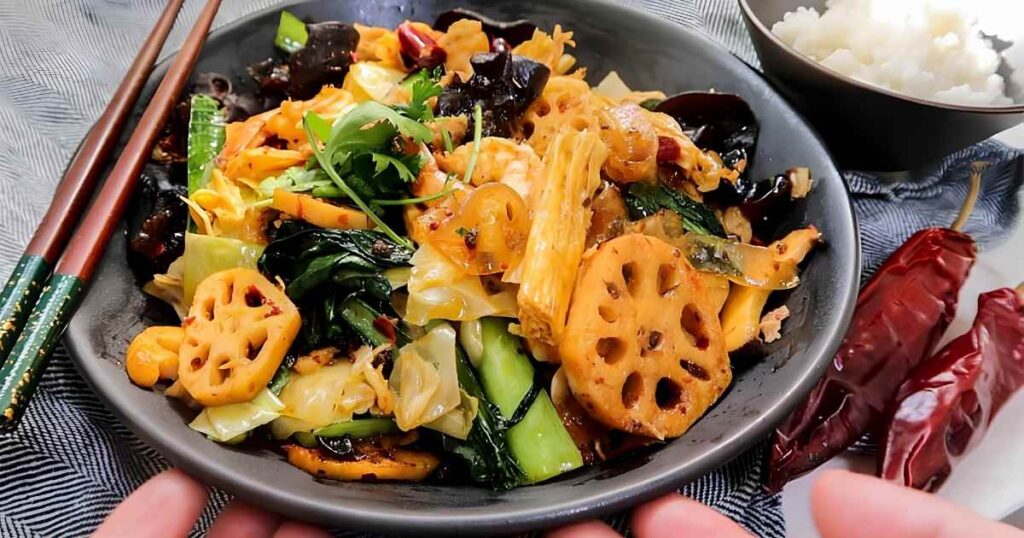
If you’ve ever stood in front of a restaurant menu wondering what “dry pot” actually means, you’re not alone. Mala dry pot known in Chinese as ganguo (干锅) or mala xiangguo (麻辣香锅) is one of Sichuan cuisine’s most approachable exports: a sizzling mix of meat, seafood, tofu, and vegetables tossed in a numbing, fiery sauce, with none of the broth that hot pot requires. It’s bold, customizable, and surprisingly simple to pull off at home.
This guide walks through a version built around shrimp, pork belly, and fried tofu, along with the vegetables that balance it all out. Along the way, you’ll learn how the dish is put together, how to choose ingredients, how the signature sauce comes together, and how to avoid the most common mistakes home cooks make with this dish.
A Sichuan Dish That’s a Cinch
Dry pot earns its name honestly. It borrows the same chili-oil, Sichuan-peppercorn flavor base as mala hot pot, but strips away the simmering broth. What’s left is a stir-fried medley coated in just enough sauce to cling to every bite no ladling, no dipping, no long simmer.
Two things make this dish so forgiving for home cooks:
- It doesn’t demand advanced wok skills. Because nearly every ingredient is cooked separately before it ever hits the final stir-fry, there’s little risk of overcrowding ruining the dish the way it would in a true stir-fry.
- It’s built around what you already have. Dry pot isn’t a fixed formula it’s closer to a method. Swap in whatever protein, tofu, or vegetable is in your fridge, and the dish still works.
Traditionally, dry pot is served in a wok or shallow pot, sometimes kept warm over a low flame at the table. That presentation makes it a little more communal than an average stir-fry everyone digs in with chopsticks to find their favorite pieces, much like they would with hot pot itself.
Choosing and Prepping Ingredients for Dry Pot
The beauty of ganguo lies in its flexibility. A simple version for two people might use just four or five main ingredients. A dinner party spread can easily stretch to eight or ten, totaling several pounds of food.
A useful way to think about ingredients is in three categories:
| Category | Common Choices | Prep Method |
| Protein | Shrimp, pork belly, chicken wings, beef, fish balls, spam | Pan-fried, shallow-fried, or deep-fried |
| Tofu & starches | Fried tofu puffs, tofu skin, potato, lotus root | Fried or blanched |
| Vegetables | Cauliflower, yu choy, green beans, wood ear mushroom, bamboo shoots | Blanched until about 75% cooked |
A few practical tips for prepping:
- Cut everything bite-sized. Uneven pieces cook unevenly, and dry pot is meant to be eaten with chopsticks straight from the pot.
- Marinate meats beforehand. A short soak in Shaoxing wine and soy sauce adds depth before the meat even hits the wok.
- Precook, don’t stir-fry raw. Shrimp gets a quick sear, pork belly is stir-fried until the fat renders, and vegetables are blanched just shy of fully done they’ll finish cooking once tossed in the sauce.
- Don’t skip the tofu. Fried tofu puffs act almost like little sponges, soaking up the mala sauce better than nearly anything else in the pot.
Because most of the work happens before the final toss, the actual “cooking” step at the end takes only a few minutes.
Related Post: The Best Rougamo Bread Recipe: Authentic Chinese Flatbread Made Easy
The Sauce for Mala Dry Pot
The sauce is what separates a forgettable stir-fry from an authentic-tasting dry pot. Restaurant versions can lean on a dozen or more spices along with fermented chili bean paste (doubanjiang), Sichuan peppercorns, and aromatics often built on a hot pot base for convenience.
For home cooks, there are two realistic paths:
- Build it from scratch, combining doubanjiang, Sichuan peppercorn, dried chilies, and aromatics like garlic and ginger in hot oil until fragrant.
- Use a ready-made mala or dry pot sauce, which is how most people in Sichuan actually make this dish at home. A good sauce should already carry the fermented, numbing, savory flavor profile without needing much doctoring.
If you go the ready-made route, a general rule of thumb is about 3 tablespoons of sauce per pound of ingredients, adjusting up or down based on how spicy you want the final dish and how much heat tolerance your table has. Cooking the sauce briefly with garlic, ginger, dried chilies, and a bit more Sichuan peppercorn before adding the precooked ingredients deepens the flavor considerably.
Recipe Tip
Sauce intensity varies a lot by brand, so treat any measurement as a starting point rather than a rule. Begin with a smaller amount, taste as you go, and add more if the dish needs it. If the sauce feels too thick or dry once everything is tossed together, a small splash of water loosens it back up without diluting the flavor.
For those cooking for a smaller group, there’s no need to scale down precisely just use enough sauce to lightly coat whatever quantity of ingredients you’ve prepped.
Mala Dry Pot With Shrimp, Tofu and Pork Belly (Ganguo 干锅/Mala Xiang Guo 麻辣香锅)
Yield: 4 servings (more with side dishes) Prep time: 30 minutes Cook time: 25 minutes
Ingredients
24 ounces of proteins
- 10 ounces tail-on shrimp
- 8 ounces pork belly, thinly sliced
- 1 teaspoon Shaoxing wine
- 1 teaspoon soy sauce
- 6 ounces fried tofu cubes
24 ounces of vegetables
- Cauliflower, broken into small florets (preferably Chinese or flowering cauliflower)
- Baby yu choy or other leafy greens, cut into large pieces
- Green beans, trimmed and cut into pieces
- Yukon gold potatoes, cut into thin half-moons or ½-inch cubes
- 2 tablespoons dried wood ear mushrooms, soaked in boiling water for 30 minutes
For final stir-fry
- ¼ cup roasted rapeseed oil (or a neutral cooking oil)
- 4–5 cloves garlic, thinly sliced
- 1-inch piece ginger, cut into slivers
- 4–5 dried chilies, torn into large pieces (optional)
- ½–1 teaspoon Sichuan peppercorn (optional)
- ½ teaspoon cumin seed (optional)
- 9 tablespoons mala or dry pot sauce, or to taste
- Sesame seeds, for garnish
Instructions
- Pat the shrimp dry. In a separate bowl, combine the pork belly with Shaoxing wine and soy sauce, and let it marinate while you prep the rest.
- Cut all vegetables into bite-size pieces. Precision isn’t essential just make sure everything is roughly similar in size for even cooking.
- Bring a large pot of water to a boil. Blanch vegetables in stages by cook time: green beans and potato first (about 1 minute), then cauliflower and wood ear (1 more minute), then leafy greens (30 seconds). Aim for about 75% doneness. Drain, shock in ice water, and drain again.
- Heat a small amount of oil in a wok. Sear the shrimp briefly on each side until just turning pink not fully cooked through. Remove and set aside.
- Clean the wok, return to medium heat, and stir-fry the pork belly until the fat renders and the meat is cooked through. Remove and set aside.
- Add the ¼ cup of oil to the wok over medium-low heat. Stir-fry the garlic and ginger, then add the optional dried chilies, Sichuan peppercorn, and cumin seed until fragrant take care not to burn them. Add the fried tofu and stir-fry briefly until slightly softened.
- Add the sauce to the wok, stirring to combine with the aromatics. Add the shrimp, pork belly, and blanched vegetables, tossing everything until fully coated and heated through.
- Garnish with sesame seeds and serve directly from the wok or in a wide, shallow bowl.
FAQ’s
What’s the difference between dry pot and hot pot?
Hot pot is cooked and served in a simmering broth, while dry pot uses the same mala flavors but skips the liquid, tossing precooked ingredients in a thick sauce instead.
Can I make dry pot vegetarian?
Yes tofu, tofu skin, mushrooms, and a wide range of vegetables work well in place of meat and seafood, and many restaurants offer fully vegetarian versions.
How spicy is mala dry pot?
Spice level depends entirely on the sauce and how much you use; start with less sauce and add more, since heat tolerance varies widely from person to person.
Can dry pot be reheated?
Yes, dry pot reheats well and some cooks find the flavor even improves the next day, similar to a curry.
What can I substitute for pork belly?
Bacon, chicken wings, or thinly sliced beef all work as substitutes, since the key step is precooking the protein before tossing it in the sauce.
Conclusion
Mala dry pot proves that Sichuan cooking doesn’t have to mean hours at the stove or a pantry stocked with two dozen obscure spices. At its core, this dish is a method: precook your proteins and vegetables separately, then bring everything together in a hot, fragrant sauce for just a few minutes. That flexibility is exactly what makes it so easy to repeat with whatever’s in the fridge shrimp one week, chicken wings the next, all vegetables when you’re keeping it light.
Whether you build the sauce from scratch with doubanjiang and Sichuan peppercorns or lean on a good ready-made version, the payoff is the same: a communal, hearty dish that tastes like it took far longer than it actually did. Once you’ve made it once, dry pot tends to become a regular rotation not a special-occasion project.