Mary Berry Shortcrust Pastry Recipe is one of the most trusted recipes in British home baking. It uses just four simple ingredients. The results are always crisp, buttery, and tender. Mary Berry has spent decades making baking feel easy for everyone. This recipe is no exception. Whether you’re a complete beginner or a seasoned baker, it works every time.
Shortcrust pastry is the base for so many favourites. Think quiches, meat pies, mince pies, and sweet tarts. Mary’s method keeps things simple. Cold butter, plain flour, a pinch of salt, and cold water that’s all you need. Follow a few key tips and you’ll get perfect pastry every single time. This guide covers everything, from mixing the dough to blind baking and beyond. Let’s get started.
What Is Mary Berry Shortcrust Pastry?
Shortcrust pastry is a classic British dough made from plain flour, cold fat, and just enough water to bring it together. The “short” in shortcrust refers to the crumbly, tender texture created by coating the flour particles in fat before any water is added this limits gluten development and gives the pastry its signature snap.
Mary Berry’s version keeps things beautifully traditional. Her base recipe uses a higher ratio of fat to flour, resulting in a pastry that’s buttery in flavour, firm enough to hold fillings, yet tender enough to melt in your mouth. It works equally well for sweet tarts and savoury pies which is exactly why it’s become a staple of British home baking.
Related Post: Mary Berry Spaghetti Bolognese Recipe
Why This Recipe Is Worth Trying
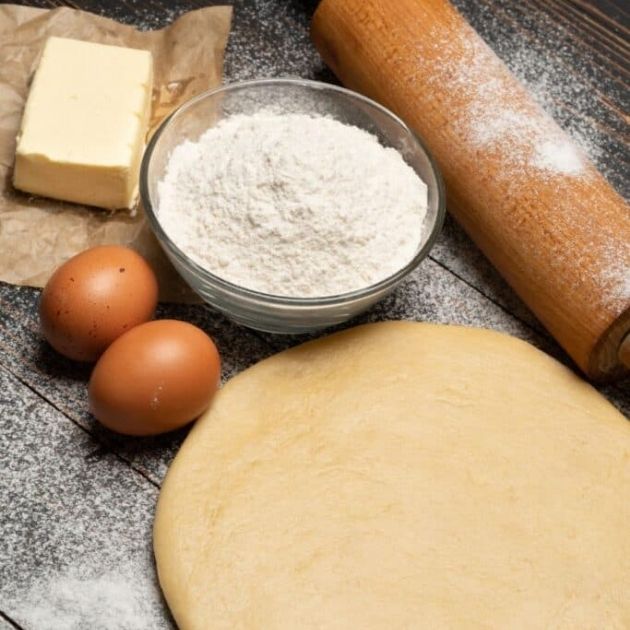
- Foolproof for beginners no fancy equipment, no complex technique
- Only 4 core ingredients flour, butter, salt, and water
- Incredibly versatile sweet tarts, savoury pies, quiches, mince pies
- Consistently crisp proper rubbing-in technique ensures light, crumbly texture
- Freezer-friendly make ahead and store for up to 3 months
Essential Ingredients for Mary Berry Shortcrust Pastry
| Ingredient | Amount | Purpose |
| Plain flour (sifted) | 225g (8oz) | Provides structure |
| Cold unsalted butter (cubed) | 100g (4oz) | Flavour and tenderness |
| Pinch of salt | ¼ tsp | Enhances overall taste |
| Cold water | 2–3 tbsp | Binds the dough |
Mary’s lard variation: For extra crispness, use 50g butter + 50g cold lard instead of all butter. The butter brings flavour; the lard raises the melting point, giving a lighter, crisper crumb.
For sweet shortcrust pastry, add 1–2 tablespoons of caster sugar and one egg yolk to the above base.
Kitchen Tools You’ll Need
- Large mixing bowl
- Sieve or fine-mesh strainer
- Pastry cutter or fingertips
- Rolling pin
- Cling film
- Tart or pie tin (loose-bottomed recommended)
- Baking beans or uncooked rice (for blind baking)
- Parchment/greaseproof paper
How to Make Mary Berry Shortcrust Pastry (Step-by-Step)
Step 1: Mix the Dry Ingredients
Sift 225g of plain flour and a pinch of salt into a large, cool mixing bowl. Sifting removes lumps and aerates the flour, which contributes to a lighter final texture.
Step 2: Rub in the Butter
Add the cold, cubed butter to the flour. Using just your fingertips (not your palms they’re too warm), rub the butter into the flour with a lifting, rolling motion. Work quickly until the mixture looks like coarse, pale breadcrumbs. You should still see a few pea-sized butter pieces that’s a good sign.
Pro tip: Lift the flour high as you rub to incorporate air. Cold hands are your best tool here.
Step 3: Add Cold Water
Sprinkle cold water over the mixture one tablespoon at a time. Use a palette knife or round-bladed knife to stir not your hands bringing the dough together gradually. You’ll typically need 2–3 tablespoons total.
Step 4: Form the Dough
Once the dough just starts to clump, tip it onto a lightly floured surface and bring it together gently with your hands. Do not knead it. Overworking develops gluten and makes the pastry tough. You want it firm but not smooth.
Step 5: Chill the Dough
Flatten the dough into a disc, wrap it tightly in cling film, and refrigerate for at least 20–30 minutes. This step relaxes the gluten and firms up the fat, making the pastry easier to roll and far less likely to shrink in the oven.
Step 6: Roll the Pastry
Remove the dough from the fridge and let it sit for 2–3 minutes. On a lightly floured surface, roll from the centre outward, turning the dough a quarter turn after each roll. Aim for about 3–4mm thickness.
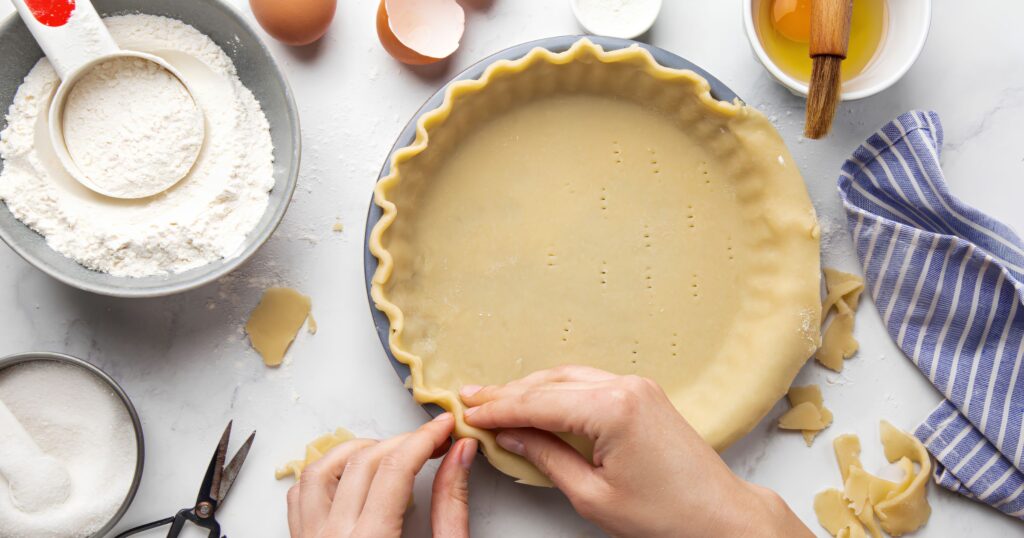
Step 7: Line Your Tin
Gently lift the pastry over your rolling pin and lower it into the tin. Press it carefully into the edges without stretching stretching causes shrinkage. Trim the excess with a knife, leaving a slight overhang.
Step 8: Blind Bake (If Required)
For wet fillings (quiche, custard tarts), blind baking is essential:
- Prick the base all over with a fork
- Line with parchment paper
- Fill with baking beans or uncooked rice
- Bake at 200°C/180°C fan for 15 minutes
- Remove beans and paper, bake a further 5 minutes until pale golden
Expert Tips for Perfect Shortcrust Pastry
- Temperature is everything cold butter, cold water, cool hands, cool bowl
- Don’t overwork the dough mix until it just comes together, then stop
- Double chill rest after mixing AND after lining the tin; this is Mary Berry’s own top tip for preventing shrinkage
- Roll evenly uneven thickness means uneven baking; rotate often
- Dock the base fork pricks release steam and prevent a soggy bottom
- Use a loose-bottomed tin makes removal clean and professional
Common Mistakes and How to Fix Them
| Mistake | Why It Happens | Fix |
| Pastry shrinks in the tin | Dough overworked or insufficiently chilled | Double-rest the dough; don’t stretch when lining |
| Tough, chewy texture | Too much water or over-kneading | Add water sparingly; handle gently |
| Soggy base | Skipped blind baking | Always pre-bake with beans for wet fillings |
| Cracks when rolling | Dough too cold or too dry | Rest at room temp for 2 mins; patch cracks with spare dough |
| Butter leaking out | Fat too warm | Work faster; return to fridge mid-process if needed |
What I Got Wrong (And How I Fixed It)
The first time I made shortcrust pastry, I used warm butter straight from the counter. The mixture turned greasy rather than sandy, and the baked result was dense and heavy nothing like the crisp shell I was after.
The fix was simple: I started cutting butter into cubes and freezing them for 10 minutes before use. Working faster during the rubbing-in stage also made a real difference. Once I started treating “cold” as a non-negotiable not a suggestion my pastry transformed completely.
Healthier Version of Mary Berry Shortcrust Pastry
Want a slightly lighter version? These swaps work without sacrificing too much texture:
- Reduced butter use 75g butter + 25g Greek yoghurt for binding
- Wholemeal flour replace up to 50% plain flour with wholemeal for added fibre (expect a denser, nuttier result)
- Olive oil pastry not traditional, but 60ml light olive oil + 3 tbsp cold water creates a workable, lower-saturated-fat dough
- Dairy-free cold coconut oil or dairy-free block butter works surprisingly well
Ingredient Substitutions
| Original | Substitute | Effect |
| Plain flour | Gluten-free flour blend | Slightly more crumbly |
| Butter | Half butter + half lard | Crisper, shorter texture |
| Water | Ice-cold milk or egg yolk | Richer, more golden colour |
| Unsalted butter | Salted butter | Reduce added salt to a pinch |
Popular Variations of Mary Berry Shortcrust Pastry
Best Ever Shortcrust Pastry Recipe
The classic base: 225g plain flour, 100g cold butter, pinch of salt, 2–3 tbsp cold water. This is your go-to for almost any pie or tart.
Mary Berry Shortcrust Pastry for Meat Pie
Use the standard recipe. For added depth, incorporate a small pinch of dried thyme or smoked paprika into the flour before rubbing in the butter. This pairs beautifully with beef, lamb, or chicken fillings.
Mary Berry Shortcrust Pastry Recipe for Mince Pies
For mince pies, a slightly sweeter dough works best. Add 1 tbsp icing sugar to the flour. Roll to 3mm and use fluted cutters for the base and star-shaped lids. Bake at 200°C for 12–15 minutes until pale gold.
Mary Berry Shortcrust Pastry for Savoury Pies
The standard recipe works perfectly. For extra savouriness, add ½ tsp dried herbs (thyme, rosemary, or mixed herbs) or a teaspoon of finely grated Parmesan to the flour.
Mary Berry Shortcrust Pastry Apple Pie Recipe
Add 1 tbsp caster sugar to the flour. Fill your blind-baked shell with peeled, sliced apples tossed in sugar, cinnamon, and a squeeze of lemon. Top with a second pastry layer, seal the edges, brush with egg wash, and bake at 190°C for 35–40 minutes.
Mary Berry Sweet Shortcrust Pastry Recipe
Combine 225g plain flour, 100g cold butter, 50g icing sugar, 1 egg yolk, and 1–2 tbsp cold water. The egg yolk enriches the dough and gives a beautifully golden finish ideal for lemon tarts, custard tarts, and dessert shells.
Mary Berry Shortcrust Pastry for Quiche
Blind bake the pastry case at 200°C/180°C fan for 15 minutes with beans, then 5 minutes without. Fill with a custard of 3 eggs, 200ml double cream, grated cheese, and your chosen additions (bacon, leek, spinach). Bake at 180°C for 25–30 minutes until just set with a slight wobble.
Mary Berry Shortcrust Pastry Recipe with Lard
Replace 50g of the butter with 50g cold lard. The result is a notably crisper, more flaky pastry particularly well-suited to savoury pies. The lard’s higher melting point creates more distinct layers, while the butter maintains flavour.
What to Serve with Mary Berry Shortcrust Pastry
Sweet Filling Ideas
- Fresh strawberry and cream tart
- Lemon curd with whipped cream
- Treacle tart with golden syrup
- Bakewell tart with almond frangipane
- Classic custard tart
Savoury Filling Ideas
- Quiche Lorraine (bacon, egg, cream, Gruyère)
- Caramelised onion and goat’s cheese tart
- Chicken and mushroom pie
- Steak and kidney with gravy
- Spiced lamb and vegetable filling
Storage and Reheating Guide
How to Store Shortcrust Pastry
- Uncooked dough: Wrap tightly in cling film; refrigerate for up to 3 days
- Baked pastry cases: Store in an airtight container at room temperature for 2–3 days
- Filled pies/tarts with dairy or meat: Refrigerate and consume within 2 days
How to Freeze Shortcrust Pastry
- Wrap raw dough in cling film, then place in a freezer bag stores for up to 3 months
- You can also freeze blind-baked pastry shells (unfilled) for up to 1 month
- Thaw overnight in the fridge before use; do not refreeze once thawed
How to Reheat Shortcrust Pastry
- Savoury pies: Reheat at 180°C/160°C fan for 15–20 minutes, loosely covered with foil
- Pastry cases: 5–10 minutes at 160°C to refresh the crispness
- Avoid the microwave it makes the pastry soft and rubbery
Nutrition Information (Per Serving)
Based on 1/8 of the standard recipe (pastry only, no filling)
| Nutrient | Amount (approx.) |
| Calories | 185 kcal |
| Carbohydrates | 20g |
| Protein | 3g |
| Fat | 11g |
| Saturated Fat | 7g |
| Fibre | 0.7g |
| Sodium | 50mg |
Values will vary based on fat type and any sugar additions.
Mary Berry Shortcrust Pastry Recipe Card
Ingredients
- 225g (8oz) plain flour, sifted
- 100g (4oz) cold unsalted butter, cubed
- ¼ tsp fine salt
- 2–3 tbsp ice-cold water
For sweet pastry: add 1–2 tbsp caster sugar + 1 egg yolk
Instructions
- Sift flour and salt into a large cold bowl
- Add cold cubed butter; rub into flour with fingertips until the mixture resembles fine breadcrumbs
- Sprinkle cold water one tablespoon at a time, mixing with a knife until dough begins to clump
- Bring together into a smooth disc with your hands do not knead
- Wrap in cling film; chill for at least 20–30 minutes
- Roll on a lightly floured surface to 3–4mm thickness, turning frequently
- Lift into tin gently; press into edges without stretching
- Blind bake at 200°C/180°C fan with beans for 15 minutes if using wet fillings
Prep Time: 10 minutes | Chilling Time: 30 minutes | Bake Time: 15–20 minutes Makes: Enough for one 23cm tart or pie case | Difficulty: Easy
Did You Make This Recipe?
If you tried this Mary Berry shortcrust pastry, I’d love to know how it went. Did you go all-butter or try the lard version? Make it sweet or savoury? The beauty of this recipe is how completely it bends to whatever you’re making once you’ve mastered the technique, the possibilities really are endless.
Leave a comment, share a photo, or rate the recipe below.
Conclusion
Mary Berry shortcrust pastry recipe earns its place as a British baking essential. It’s built on four humble ingredients and one core principle: keep everything cold and handle it gently. Master that, and you’ll have a reliable, golden, tender pastry that works for everything from a showstopping lemon tart to a hearty Saturday meat pie.
Whether you’re new to baking or you’ve been at it for years, this is the kind of recipe that rewards you every time you make it and gets even better as you learn to trust your hands.