Few postpartum wellness topics stir as much curiosity and controversy as the placenta smoothie recipe. Once a quiet practice whispered about in holistic birthing circles, placentophagy (consuming the placenta after birth) has stepped into the mainstream, fueled by celebrity endorsements and a wave of new mothers seeking natural postpartum recovery options. But behind the headlines lie serious myths, real questions, and a recipe that’s simpler than most people expect.
Whether you’re a skeptic researching the science or a new mama genuinely curious about this postnatal recovery smoothie, this guide covers it all honestly, thoroughly, and with your safety as the top priority.
What Is a Placenta Smoothie?
A placenta smoothie is a postnatal drink made by blending a small, cleaned portion of the postpartum placenta with nutrient-rich fruits, liquids, and other wholesome ingredients. The result looks and tastes like an ordinary berry smoothie most women report they cannot detect any unusual flavor at all.
The broader practice is called placentophagy the ingestion of the placenta after childbirth. While this behavior is universal among placental mammals, it is not a verified historical human tradition. Its recent popularity in Western cultures has been largely driven by celebrity influencers such as Kim Kardashian, Hilary Duff, and Chrissy Teigen, who have publicly shared their experiences.
The placenta itself is a remarkable temporary organ. It contains iron, protein, B vitamins, oxytocin, progesterone, and estrogen all compounds that play critical roles during pregnancy. Whether these nutrients remain bioavailable after processing and blending is, at this stage, still a subject of ongoing scientific inquiry.
Related Post: Ben Carson Honey Recipe
Why You’ll Love This Placenta Smoothie Recipe
Before we get into the kitchen, here are three genuine reasons mothers choose to try this recipe presented honestly, without hype.
1. A Natural Energy Recharger
Childbirth depletes your body significantly. Iron losses from bleeding are real, and fatigue in the first postpartum days can be intense. The placenta does contain iron and vitamin B6, two nutrients directly linked to energy metabolism and mood regulation. Advocates of this postpartum recovery smoothie report feeling more energized and emotionally grounded in the hours after drinking it.
What the science says: Studies to date show no statistically significant difference in iron levels between mothers who consume placenta and those who don’t. However, the fruit base banana, berries, coconut water genuinely does provide natural sugars, electrolytes, and antioxidants that support energy. The smoothie as a whole is nutritionally beneficial, regardless of the placenta component.
2. A Cost-Saving Recovery Option
Postpartum supplements, hormonal support teas, and specialty recovery drinks can add up quickly. A placenta smoothie uses something your body already produced making it essentially a zero-cost addition to your recovery routine (the fruits and liquids are the only grocery expense).
For mothers already planning to keep their placenta for encapsulation or other remedies, setting aside a small portion for a smoothie adds no additional cost.
3. Deliciously Balanced Flavor
This is the part that surprises almost everyone. When blended with banana, mixed berries, and coconut water, the taste is genuinely sweet, creamy, and refreshing. The small amount of placenta used (1–2 tablespoons) is completely masked by the fruit. Multiple women and even food bloggers have described it as simply tasting like a berry smoothie.
How to Make a Placenta Smoothie Recipe
Quick Overview
| Detail | Info |
| Prep Time | 10 minutes |
| Total Time | 10 minutes |
| Servings | 1–2 |
| Calories | ~220 kcal |
| Skill Level | Easy |
| Course | Beverage / Postpartum Wellness |
This smoothie comes together in under 10 minutes using a standard high-speed blender. No cooking is required if using raw-frozen placenta; minimal prep is needed if using steamed portions. The most time-consuming step is proper preparation of the placenta itself which should always be done in advance, under medical or midwife guidance.
Key Ingredients for Placenta Smoothie Recipe
| Ingredient | Quantity | Purpose |
| Fresh or steamed placenta (medically approved) | 1–2 tablespoons | Core ingredient; iron, hormonal compounds |
| Ripe banana | 1 medium | Creaminess, potassium, natural sweetness |
| Mixed berries (strawberries, blueberries, raspberries) | ½ cup | Antioxidants, vitamin C, flavor |
| Coconut water or almond milk | 1 cup | Hydration, electrolytes, blending base |
| Greek yogurt (optional) | 2 tablespoons | Protein, probiotics, texture |
| Honey or date syrup (optional) | 1 teaspoon | Natural sweetness |
| Ice cubes | 3–4 | Thickness and temperature |
Safety First: Always ensure your placenta has been hygienically handled from the moment of delivery. It should be refrigerated immediately, then either frozen raw in small cubes or steamed and processed under the supervision of a qualified midwife or placenta specialist.
Step-by-Step Instructions
- Prepare the placenta. Have your placenta professionally processed either frozen raw in tablespoon-sized cubes or steamed and sliced before the birth if possible. Never use placenta that has been left unrefrigerated or improperly stored.
- Blend the fruit base. Add banana, mixed berries, and coconut water (or almond milk) to a high-speed blender. Blend for 30 seconds until completely smooth.
- Add the placenta portion. Drop in your 1–2 tablespoons of processed placenta. Blend again for 30–60 seconds until fully incorporated. The color will deepen slightly; the taste will remain fruity.
- Adjust consistency. Add Greek yogurt for extra creaminess, or a few ice cubes for a colder, thicker texture.
- Sweeten to taste. Add honey or date syrup only if needed. Ripe banana and berries usually provide sufficient natural sweetness.
- Serve immediately. Pour into a chilled glass and drink fresh. Nutrients and flavor are best within the first 30 minutes.
What to Serve Placenta Smoothie With
Pair this smoothie with complementary postpartum foods for a complete recovery meal:
- Oatmeal with flaxseeds adds fiber and supports milk production
- Whole-grain toast with almond butter healthy fats and sustained energy
- Soft-boiled eggs high-quality protein for tissue repair
- Fennel or chamomile tea gentle digestive support and relaxation
- Fresh orange slices vitamin C enhances iron absorption
Avoid pairing with caffeine in the early postpartum period, as it can worsen hormonal fluctuations and disrupt newborn sleep if breastfeeding.
Top Tips for Perfecting the Placenta Smoothie
Ingredient Substitutions
- Swap banana for mango or avocado for a tropical or ultra-creamy version
- Replace coconut water with pomegranate juice for extra antioxidant power
- Add a handful of spinach or kale for a green smoothie variant rich in folate and additional iron
- Use maple syrup instead of honey if you prefer a vegan-friendly sweetener
Timing Adjustments
- Prepare and freeze placenta portions within the first few hours of birth for best quality
- Consume the smoothie within 24 hours of the placenta’s delivery if using raw placenta
- If using frozen placenta cubes, thaw in the refrigerator overnight and blend within 12 hours of thawing
Common Mistakes to Avoid
- Never use unprocessed or improperly stored placenta. The placenta is not a sterile organ and can harbor pathogens including Group B Streptococcus (GBS), as documented in a CDC case report.
- Don’t skip the medical consultation. Always discuss placentophagy with your OB-GYN or midwife before proceeding.
- Avoid leaving the smoothie at room temperature. Drink immediately or refrigerate; do not leave it out for more than 30 minutes.
- Don’t over-sweeten. Fruits naturally balance the flavor; excess sweeteners add unnecessary sugar during hormonal recovery.
- Don’t assume one size fits all. Some mothers experience no noticeable effects; others report significant benefits. Manage expectations accordingly.
Storing and Reheating Tips
Refrigeration
If you cannot finish the smoothie immediately, store it in an airtight glass jar in the refrigerator for up to 12 hours. Shake or stir vigorously before drinking, as natural separation will occur. Do not store in plastic containers, which can affect flavor.
Freezing
Pour leftover smoothie into ice cube trays and freeze for up to one month. When ready to use, transfer cubes to the refrigerator overnight to thaw slowly, then re-blend for 20–30 seconds before consuming. This method works especially well for mothers who want to space out placenta consumption over the first week postpartum.
⚠️ Safety Reminder: The CDC has issued warnings regarding improperly processed placenta products. Always ensure your placenta was tested, handled hygienically, and processed by a qualified specialist. Discuss any signs of infection with your healthcare provider immediately.
Table: Health Benefits of Placenta Smoothie Recipe
| Nutrient / Compound | Claimed Benefit | Source in Smoothie | Evidence Level |
| Iron | Replenishes blood loss, reduces postpartum fatigue | Placenta | Limited; studies show no significant difference vs. placebo |
| Vitamin B6 | Mood regulation, hormone metabolism | Placenta, banana | Moderate (in isolated form); unclear after processing |
| Potassium | Muscle function, fluid balance | Banana, coconut water | Well-supported (from fruits) |
| Antioxidants | Reduce cellular inflammation | Berries | Well-supported (from fruits) |
| Protein | Tissue repair, milk production support | Greek yogurt | Well-supported (from yogurt) |
| Electrolytes | Hydration, energy balance | Coconut water | Well-supported (from coconut water) |
| Oxytocin-like compounds | Emotional bonding, mood support | Placenta | Anecdotal; not clinically confirmed in humans |
| Probiotics | Gut health, digestion | Greek yogurt | Well-supported (from yogurt) |
Bottom line: The fruit and yogurt base of this smoothie delivers genuinely evidence-backed nutritional benefits. The placenta component remains under-researched, with most benefits currently based on self-reported experience rather than controlled clinical trials.
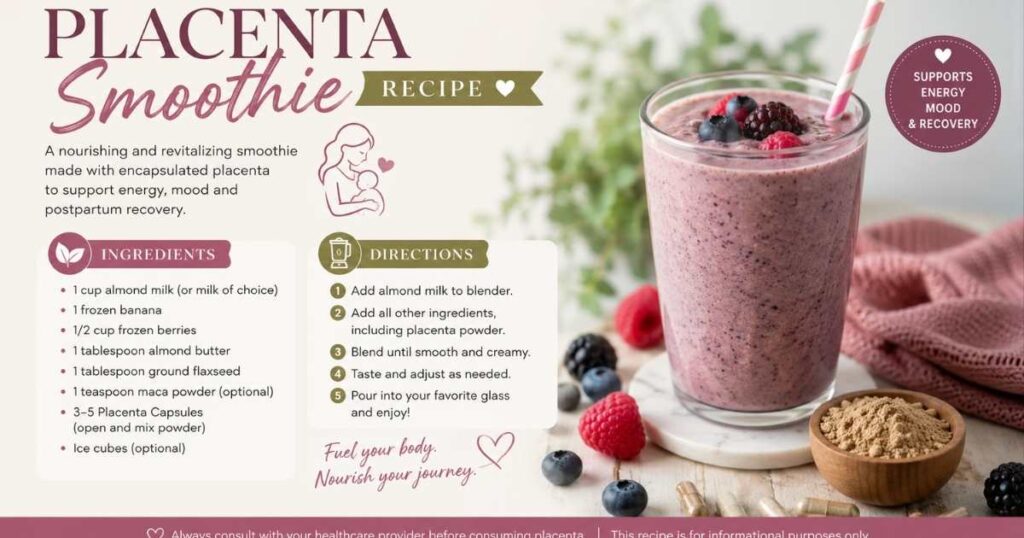
Placenta Smoothie Recipe
A creamy, fruit-forward postpartum recovery smoothie with a nutrient-dense base and an optional placenta addition for mothers exploring holistic postnatal wellness.
Equipment
- High-speed blender (such as Vitamix or Nutribullet)
- Sharp knife and clean cutting board
- Measuring cups and spoons
- Airtight glass jar (for storage)
- Chilled glass for serving
Ingredients
- 1–2 tablespoons fresh, frozen-raw, or steamed placenta (medically approved and hygienically handled)
- 1 medium ripe banana
- ½ cup mixed berries (strawberries, blueberries, raspberries)
- 1 cup coconut water or unsweetened almond milk
- 2 tablespoons Greek yogurt (optional adds creaminess and protein)
- 1 teaspoon honey or date syrup (optional for sweetness)
- 3–4 ice cubes (optional for texture and temperature)
Instructions
- Prepare the placenta Confirm it has been refrigerated since delivery and either frozen in cubes or steamed and sliced under midwife supervision. Never use unverified or unrefrigerated placenta.
- Build the fruit base Add banana, berries, and coconut water to your blender. Blend for 30 seconds until silky smooth.
- Incorporate the placenta Add your measured placenta portion and blend again for 30–60 seconds until fully combined. The smoothie should be uniformly colored and smooth.
- Adjust texture Add Greek yogurt or ice cubes and blend for 10 more seconds to reach your preferred consistency.
- Sweeten if needed Taste and add honey or date syrup only if the fruit base isn’t sweet enough for you.
- Serve fresh Pour into a chilled glass immediately. Drink within 30 minutes for optimal freshness and nutrient retention.
Notes
- Storage: Refrigerate leftovers in a sealed glass jar for up to 12 hours. Shake before drinking.
- Freezing: Freeze in ice cube trays for up to 1 month; thaw overnight in the fridge, then re-blend.
- Flavor boost: Add a pinch of cinnamon or fresh ginger root for warmth and digestive support.
- Green variation: Add a small handful of fresh spinach for extra iron and folate without altering the taste significantly.
- Medical clearance: Always discuss placentophagy with your OB-GYN or certified midwife before attempting this recipe.
- Dairy-free option: Replace Greek yogurt with coconut yogurt for an equally creamy, probiotic-rich alternative.
Conclusion
The placenta smoothie recipe sits at a fascinating intersection of ancient wellness tradition and modern postpartum recovery culture. It is not a scientifically proven cure for postpartum depression, low milk supply, or fatigue and any source claiming otherwise oversteps what the current evidence actually shows. Major health organizations, including the CDC and the American College of Obstetricians and Gynecologists, advise caution and note that potential risks including bacterial contamination currently outweigh the documented benefits for human consumption.
That said, many mothers who have tried this smoothie report feeling empowered, nourished, and supported by the practice. If you are considering it, the most important steps are to discuss it openly with your healthcare provider, ensure your placenta is handled safely from the moment of delivery, and work with a certified placenta specialist. The recipe itself loaded with berries, banana, and coconut water is genuinely nutritious on its own terms. Whether or not you include the placenta, you are doing something meaningful: choosing to nourish your body in those tender, demanding first days of motherhood.