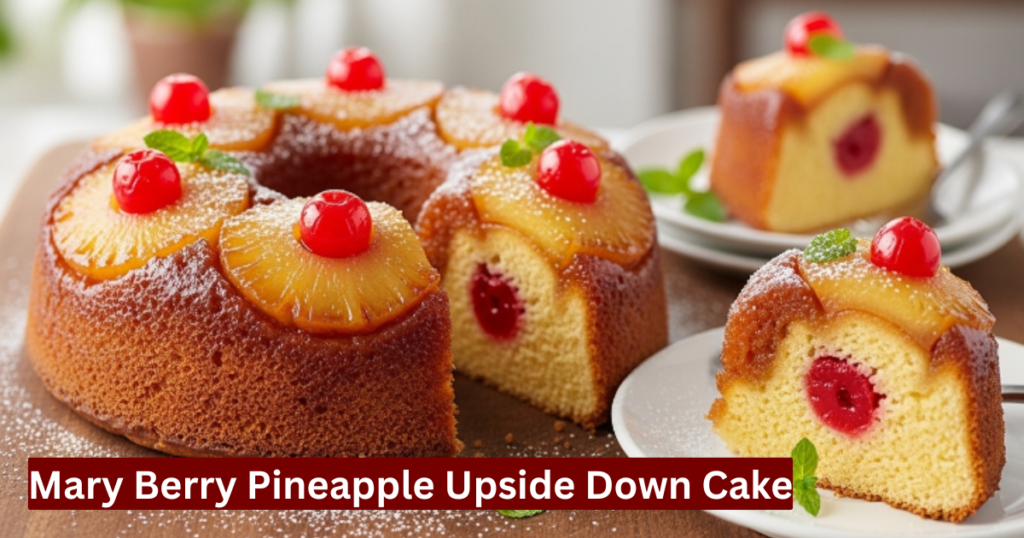
Mary Berry Pineapple Upside Down Cake Recipe is one of those classics that never gets old. It looks stunning, tastes incredible, and takes less effort than you’d expect. Golden caramelised pineapple rings sit on top of a soft, buttery sponge and every slice delivers that perfect balance of fruity sweetness and tender crumb. Whether you’re baking for Sunday dinner or afternoon tea, this cake always earns its place on the table.
What makes this recipe so reliable is its simplicity. Mary Berry uses the all-in-one method, so everything goes into a single bowl. No complicated stages, no special skills needed. You get a moist, beautifully presented cake every single time. If you’ve never tried baking it before, this is the recipe that will make you glad you did.
Related Post: Mary Berry Lancashire Hotpot Recipe
What Is Mary Berry’s Pineapple Upside Down Cake?
Mary Berry’s pineapple upside down cake is a classic British retro dessert with a foolproof twist. Pineapple rings and glacé cherries are layered into the bottom of a greased tin along with a buttery caramel base. A light, one-bowl sponge is spooned on top, and the whole thing is baked until golden. The magic happens when you invert it that syrupy fruit layer becomes the beautiful topping.
What sets Mary Berry’s version apart is the simplicity. She uses the all-in-one method, meaning everything for the sponge goes into a single bowl. No creaming, no faff, no multiple stages. You get a moist, buttery crumb with a tender pineapple topping every time.
Why This Recipe Is Worth Trying
This cake has been a staple of British baking for decades, and there’s a reason it keeps coming back.
- Beginner-friendly The one-bowl method means even new bakers can nail it first time.
- Stunning presentation Caramelised pineapple and bright cherries look like you’ve spent hours decorating.
- Pantry ingredients Canned pineapple, butter, sugar, eggs, and flour. Nothing exotic.
- Moist texture Pineapple juice in the batter keeps the sponge from drying out.
- Works for any occasion Tea time, family pudding, potluck, or celebration cake.
Essential Ingredients to Make Mary Berry Pineapple Upside Down Cake
For the Topping
| Ingredient | Quantity | Purpose |
| Unsalted butter | 50g | Creates the caramel base |
| Light brown sugar | 50g | Adds depth and sticky glaze |
| Canned pineapple rings (in juice) | 1 tin (approx. 425g) | Star of the topping |
| Glacé cherries | 4–6 | Colour and classic decoration |
For the Sponge
| Ingredient | Quantity | Purpose |
| Self-raising flour | 100g | Structure and lift |
| Baking powder | 1 tsp | Extra rise |
| Unsalted butter (softened) | 100g | Richness and moisture |
| Caster sugar | 100g | Fine crumb texture |
| Eggs (medium) | 2 | Binding and lift |
| Pineapple juice (reserved from tin) | 2 tbsp | Flavour and moisture |
| Milk | 1 tbsp | Softens the batter |
| Vanilla extract | 1 tsp | Rounds out the flavour |
Handy Kitchen Tools for Best Results
You don’t need much, but the right kit makes the process smoother:
- 20cm (8-inch) round solid-base cake tin Do not use a springform tin; the liquid caramel will leak out the bottom.
- Electric hand whisk or stand mixer Essential for the one-bowl method. A wooden spoon works but takes more effort.
- Small saucepan For melting the butter and sugar for the caramel base.
- Palette knife or spatula For spreading the batter evenly over the fruit without disturbing it.
- Baking parchment Line the base for a clean release every time.
- Skewer or cocktail stick To test whether the sponge is fully baked.
Step-by-Step Guide to Making Mary Berry Pineapple Upside Down Cake
Step 1: Preheat and Prepare the Tin
Heat your oven to 180°C (160°C fan) / Gas Mark 4. Grease a 20cm solid round cake tin with butter and line the base with baking parchment. Using a solid tin is non-negotiable springform tins let the syrup escape.
Step 2: Make the Caramel Topping
Melt 50g of butter with 50g of light brown sugar in a small saucepan over low heat. Stir until dissolved and just beginning to bubble. Pour this mixture into the prepared tin and spread it evenly across the base. This is what gives the cake that deep, glossy caramel finish once inverted.
Step 3: Arrange the Fruit
Drain the pineapple rings, reserving the juice for the batter. Pat the rings dry with kitchen paper this is a key step that prevents a soggy bottom. Arrange them in a single layer over the caramel. Place a glacé cherry in the centre of each ring.
Step 4: Prepare the Sponge Mixture
Put the flour, baking powder, softened butter, caster sugar, eggs, reserved pineapple juice, milk, and vanilla extract into a large mixing bowl. Beat together using an electric whisk for about 2 minutes until the batter is smooth, pale, and well combined. Don’t overmix once it’s come together.
Step 5: Spoon and Smooth
Spoon the batter carefully over the pineapple and cherries. Use a palette knife to gently smooth it to the edges of the tin. Be gentle you don’t want to shift the fruit arrangement underneath.
Step 6: Bake Until Golden
Place the tin in the centre of the preheated oven. Bake for 25–35 minutes until the sponge is risen, golden brown, and springs back when pressed lightly in the centre. A skewer inserted into the middle should come out clean. If the top is browning too quickly, loosely cover with foil for the last 10 minutes.
Step 7: Invert and Serve
Leave the cake to cool in the tin for 10–15 minutes this allows the caramel to settle and reduces the risk of sticking. Run a knife around the edge of the tin. Place a serving plate face-down over the tin and flip confidently in one swift motion. Lift the tin away to reveal the caramelised topping. Serve warm or at room temperature.
What I Got Wrong (And How I Fixed It)
Learning from mistakes is part of becoming a better baker. Here are the most common issues with this cake and exactly how to solve them:
Problem: The cake stuck to the tin. Fix: Butter the tin generously and always use a parchment circle on the base. Don’t skip this step even if you have a non-stick tin.
Problem: Soggy topping. Fix: Pat each pineapple ring completely dry before placing it in the tin. Excess juice from the can makes the caramel watery.
Problem: The sponge was dense. Fix: Check your baking powder is fresh, and avoid overmixing the batter once the flour is added.
Problem: Cake too dark on top. Fix: Drop the oven temperature slightly and use the middle shelf. Every oven is different check 5 minutes before the recipe suggests.
Problem: The fruit slid when I spooned the batter on. Fix: Spoon the batter gently from the edges inward and use the back of a spoon rather than pressing down firmly.
Healthier Version of Mary Berry’s Pineapple Upside Down Cake
You can make a lighter version without compromising too much on taste:
- Replace butter in the sponge with Greek yogurt or light margarine to cut saturated fat.
- Swap light brown sugar in the topping for coconut sugar, which has a lower glycaemic index.
- Use wholemeal self-raising flour in place of white for added fibre and nutrients.
- Choose pineapple in juice (not syrup) to reduce overall sugar content.
- Reduce the caramel topping butter by 10g it still caramelises, just a little less richly.
Ingredient Substitutions for Mary Berry Pineapple Upside Down Cake
| Original Ingredient | Substitution | Notes |
| Self-raising flour | Gluten-free self-raising blend | Add 1 tbsp extra milk if needed |
| Eggs | 1 tbsp ground flaxseed + 3 tbsp water per egg | Let sit for 5 minutes before using |
| Butter | Plant-based butter | Works well in both sponge and topping |
| Milk | Oat milk or almond milk | Use unsweetened variety |
| Glacé cherries | Raspberries or dried cranberries | Adds tartness |
| Canned pineapple | Fresh pineapple rings | Ensure they’re ripe; pat very dry |
| Light brown sugar | Coconut sugar or muscovado | Muscovado gives deeper caramel notes |
Pairing Ideas: What to Serve With Mary Berry Pineapple Upside Down Cake
This cake is brilliant on its own, but these pairings take it to another level:
- Custard The quintessential British pairing. Warm, smooth custard complements the caramelised fruit perfectly.
- Clotted cream Rich and indulgent, ideal for an afternoon tea spread.
- Vanilla ice cream The cold creaminess against the warm, sticky cake is a classic contrast.
- Whipped double cream Light and pillowy, this balances the sweetness without competing.
- Crème fraîche Slightly tangy, which cuts through the sugar and freshens every bite.
Expert Tips to Make Perfect Mary Berry Pineapple Upside Down Cake
- Use a solid tin, not springform. The caramel base is liquid before baking and will leak from a springform tin.
- Dry your pineapple. Press the rings between sheets of kitchen paper for a few minutes. Wet pineapple steams rather than caramelises.
- Room temperature butter and eggs. Cold ingredients don’t emulsify well and can make a lumpy batter.
- Don’t rush the flip. Cooling for 10–15 minutes in the tin allows the syrup to thicken slightly, so it clings to the fruit rather than pooling on the plate.
- Level the batter gently. Use a palette knife and work from the outside in, without pressing down onto the fruit.
- Check earlier than you think. Ovens vary. Start checking at the 22-minute mark.
- Reserve the pineapple juice. A tablespoon or two in the batter adds flavour and moisture without making it wet.
- One confident flip. Hesitation leads to lopsided cakes. Commit to the turn.
Creative Ways to Customize Mary Berry Pineapple Upside Down Cake
This recipe is a wonderful base for experimentation:
- Tropical twist Replace half the pineapple with sliced mango or papaya for an exotic flavour.
- Coconut sponge Swap 25g of flour for desiccated coconut in the batter.
- Spiced version Add ½ tsp of ground ginger or cinnamon to the sponge batter.
- Rum caramel Add a tablespoon of dark rum to the melted butter and sugar mixture.
- Mixed fruit topping Use a combination of pineapple, peach slices, and maraschino cherries.
- Mini versions Divide the batter and topping between a muffin tin for individual upside-down cakes great for parties.
- Lemon zest Add the zest of one lemon to the sponge for a citrusy lift that brightens the whole cake.
Storing Mary Berry Pineapple Upside Down Cake the Right Way
Proper storage keeps the cake fresh and the topping from going sticky in the wrong way:
- Room temperature: Store in an airtight container for up to 2 days. The caramel topping continues to soften and seep into the sponge, which actually improves the flavour on day two.
- Refrigerator: Keeps well for up to 4 days. Allow to come to room temperature for 30 minutes before serving, or warm gently.
- Freezer: Freeze individual slices wrapped in cling film and then foil for up to 2 months. Defrost overnight in the fridge.
Avoid covering the cake while it’s still warm condensation will make the topping wet and the sponge soggy.
How to Reheat Mary Berry Pineapple Upside Down Cake (If Needed)
This cake is delicious served warm, and reheating it is simple:
- Oven method (best): Wrap loosely in foil and warm at 160°C for 10–12 minutes. The caramel will loosen beautifully.
- Microwave method (quick): Heat a single slice on a microwave-safe plate for 30–40 seconds on medium power. Check and add 10 seconds if needed. Don’t overheat or the sponge turns rubbery.
- Air fryer: Wrap in foil and heat at 160°C for 6–8 minutes.
Nutritional Breakdown (per serving)
Based on 8 servings. Values are approximate.
| Nutrient | Per Serving |
| Calories | 360–380 kcal |
| Carbohydrates | 44–46g |
| Protein | 4g |
| Fat | 19–21g |
| Saturated Fat | 11–13g |
| Sugar | 28–30g |
| Fibre | 1g |
| Salt | 0.3g |
Mary Berry Pineapple Upside Down Cake
Prep time: 20 minutes | Cook time: 30 minutes | Total time: 50 minutes | Servings: 8
Ingredients
For the Topping
- 50g unsalted butter
- 50g light brown sugar
- 1 tin (425g) pineapple rings in juice, drained (reserve the juice)
- 5–6 glacé cherries
For the Sponge
- 100g self-raising flour
- 1 tsp baking powder
- 100g unsalted butter, softened
- 100g caster sugar
- 2 medium eggs
- 2 tbsp reserved pineapple juice
- 1 tbsp milk
- 1 tsp vanilla extract
Instructions
- Preheat the oven to 180°C (160°C fan) / Gas Mark 4. Grease a 20cm solid round cake tin and line the base with baking parchment.
- Melt 50g butter and 50g light brown sugar together in a small saucepan over low heat. Stir until smooth, then pour into the prepared tin.
- Pat the drained pineapple rings dry with kitchen paper. Arrange over the caramel and place a cherry in the centre of each ring.
- Add flour, baking powder, softened butter, caster sugar, eggs, pineapple juice, milk, and vanilla extract to a large bowl. Beat with an electric whisk for 2 minutes until smooth and pale.
- Spoon the batter gently over the fruit. Smooth to the edges with a palette knife.
- Bake in the centre of the oven for 28–35 minutes until golden, risen, and a skewer comes out clean.
- Cool in the tin for 12 minutes. Run a knife around the edge, place a plate over the tin, and flip swiftly. Lift the tin away. Serve warm.
Did you make this recipe?
Tried this recipe? Leave a comment below with your experience or any creative twists you added we’d love to hear how it turned out. Tag your bakes and share the joy of this classic British pudding.
Conclusion
Mary Berry Pineapple Upside Down Cake Recipe is proof that simple baking can produce truly spectacular results. It brings together a sticky caramel base, juicy pineapple rings, and a light buttery sponge all in one straightforward bake. The all-in-one method keeps things quick, the ingredients are everyday pantry staples, and the finished cake looks impressive every single time. From prep to plate, it rarely takes more than an hour.
This recipe works for beginners and experienced bakers alike. Serve it warm with custard for a cosy pudding, or at room temperature with cream for afternoon tea. Once you bake it, it becomes a regular. Give it a try this weekend one slice and you’ll completely understand why Mary Berry’s version remains a timeless British favourite.