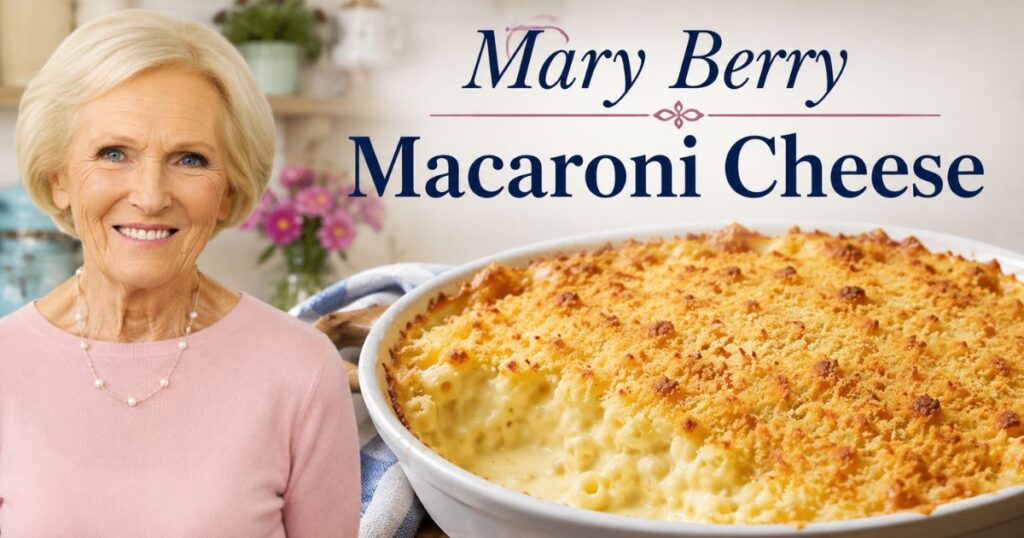
Mary Berry Macaroni Cheese is a true British classic. It is creamy, cheesy, and deeply comforting. This dish has been loved by families for generations. Mary Berry Macaroni Cheese uses simple ingredients. But the result is always rich and satisfying. A smooth béchamel sauce coats every piece of pasta. Then it bakes until golden and bubbling on top. It is the kind of meal that feels like home.
Making Mary Berry Macaroni Cheese is easier than you think. You do not need fancy ingredients or special skills. Just a handful of everyday items and about 45 minutes. Mary Berry Macaroni Cheese works perfectly for busy weeknights. It also shines at family gatherings. Kids love it. Adults go back for seconds. This recipe is simple, reliable, and absolutely delicious every single time.
What Is Mary Berry Macaroni Cheese?
Mary Berry Macaroni Cheese is a traditional British baked pasta dish featuring elbow macaroni coated in a rich, velvety béchamel sauce loaded with mature cheddar cheese, then oven-baked until the top turns beautifully golden and bubbling. Unlike American-style mac and cheese, which often relies on processed cheese or a stovetop method, Mary Berry’s version uses a classic white sauce base a proper roux made with butter and flour finished with strong cheese and a hint of mustard.
It’s comfort food done with real technique. The result is a dish that’s creamy but not stodgy, cheesy without being greasy, and satisfying enough to serve as a standalone main meal.
Related Post: Mary Berry Coronation Chicken Recipe
Why This Recipe Is Worth Trying
There are dozens of macaroni cheese recipes out there, so what makes Mary Berry’s version stand out? Here’s why this one keeps getting made again and again:
- Proven technique: The béchamel base ensures a smooth, lump-free sauce every time.
- Big flavour from simple ingredients: A combination of mature cheddar and a touch of mustard powder creates depth without needing anything exotic.
- Freezer-friendly: Mary Berry herself recommends making extra batches and freezing them it reheats brilliantly straight from frozen.
- Family-approved: Kids and adults alike love the creamy texture and golden cheesy top.
- Totally customisable: Add bacon, leeks, cherry tomatoes, or extra cheese the base recipe welcomes all variations.
Essential Ingredients to Make Mary Berry Macaroni Cheese
Here’s a breakdown of everything you’ll need to make this recipe, along with why each ingredient matters:
| Ingredient | Quantity | Purpose |
| Macaroni pasta (dried) | 300g (10.5 oz) | Main carbohydrate base |
| Unsalted butter | 50g (3.5 tbsp) | Forms the roux for béchamel |
| Plain flour | 50g (⅓ cup) | Thickens the white sauce |
| Whole milk (full-fat) | 600ml (2½ cups) | Creates the creamy sauce body |
| Mature cheddar (grated) | 200g (2 cups) | Primary cheese flavour |
| Parmesan (grated) | 50g (½ cup) | Adds umami depth |
| Dijon or dry mustard | 1 tsp | Enhances cheese flavour |
| Ground nutmeg | Pinch | Classic béchamel seasoning |
| Salt and black pepper | To taste | Seasoning |
| Panko breadcrumbs (optional) | 4 tbsp | Adds a crispy golden topping |
Key tip: Always grate your own cheese from a block. Pre-shredded cheese contains anti-caking agents that prevent proper melting and can make your sauce grainy.
Handy Kitchen Tools for Best Results
You don’t need specialist equipment, but having the right tools makes the process smoother:
- Large saucepan for making the béchamel sauce without it splashing over the edges
- Balloon whisk essential for achieving a lump-free sauce as you add the milk
- Colander to drain the pasta thoroughly
- Ovenproof baking dish (1.5–1.75 litre capacity) a shallow dish gives you more golden top per serving
- Box grater for freshly grating cheese to the right texture
- Wooden spoon for folding pasta into the sauce without breaking it up
Step-by-Step Guide to Making Mary Berry Macaroni Cheese
Prep time: 15 minutes | Cook time: 30 minutes | Total time: 45 minutes | Serves: 4
Step 1: Cook the Pasta
Bring a large pot of generously salted water to a rolling boil. Add the macaroni and cook until just al dente about one minute less than the packet instructions suggest. You want it slightly firm because it will continue cooking in the oven. Drain well but do not rinse; the surface starch helps the sauce cling to the pasta.
Step 2: Make the Roux
In a large saucepan over medium heat, melt the butter. Once it starts foaming, add the flour all at once. Stir constantly with a wooden spoon for 1–2 minutes until the mixture looks pale and slightly sandy. This cooks out the raw flour taste.
Step 3: Build the Béchamel
Take the pan off the heat briefly, then gradually pour in the milk a little at a time, whisking constantly after each addition. Return to medium heat and keep whisking until the sauce thickens and turns smooth and glossy this takes about 5–6 minutes.
Step 4: Add the Cheese and Seasonings
Remove the pan from the heat. Stir in most of the grated cheddar and all the Parmesan, reserving a handful of cheddar for the topping. Add the mustard, nutmeg, salt, and black pepper. Stir until the cheese melts completely into a silky, pourable sauce.
Step 5: Combine Pasta and Sauce
Fold the drained macaroni into the cheese sauce, making sure every piece is coated. Pour the mixture into a greased ovenproof dish.
Step 6: Top and Bake
Preheat your oven to 200°C (180°C fan / 400°F / Gas 6). Scatter the reserved cheese over the top. If using breadcrumbs, mix them with a little extra cheese and sprinkle on top. Bake for 20–25 minutes until bubbling at the edges and golden on top.
What I Got Wrong (And How I Fixed It)
Making this recipe the first time taught me a few hard lessons:
Problem 1: Lumpy sauce. I added the milk too fast and didn’t whisk enough. The fix? Take the pan off the heat, add milk slowly in small amounts, whisking thoroughly before adding more.
Problem 2: Watery dish after baking. I didn’t cook the roux long enough, so the flour wasn’t fully cooked out. Now I always give the roux a solid two minutes on the heat before adding any liquid.
Problem 3: Pasta was mushy. I cooked the macaroni to the packet time and then baked it. The result was overcooked. Now I always undercook the pasta by a full minute it absorbs more sauce in the oven and reaches the perfect texture.
Problem 4: Bland taste. I used mild cheddar and skipped the mustard. A switch to mature cheddar and the addition of dry mustard powder made a dramatic difference in depth of flavour.
Healthier Version of Mary Berry Macaroni Cheese
You can lighten this dish without sacrificing too much of its comfort factor:
- Use semi-skimmed milk instead of whole milk reduces fat without ruining the sauce.
- Reduce the cheese slightly and compensate with a stronger variety (mature cheddar gives more flavour per gram than mild).
- Add steamed vegetables like broccoli florets, spinach, or peas directly into the pasta before baking they add nutrients and help bulk out servings.
- Swap regular pasta for whole wheat macaroni to increase fibre content.
- Use wholemeal breadcrumbs for the topping for extra nutrients and crunch.
Ingredient Substitutions for Mary Berry Macaroni Cheese
| Original Ingredient | Substitution | Notes |
| Mature cheddar | Gruyère or Red Leicester | Gruyère melts beautifully; Red Leicester adds colour |
| Whole milk | Oat milk or almond milk | Sauce may be slightly thinner add a little extra flour |
| Butter | Olive oil or dairy-free spread | Works well for a dairy-free version |
| Parmesan | Pecorino Romano | Similar salty, nutty profile |
| Plain flour | Cornflour (cornstarch) | Use half the quantity; whisk into cold milk before adding |
| Panko breadcrumbs | Crushed crackers or cornflakes | Adds a different but equally pleasing crunch |
Pairing Ideas: What to Serve With Mary Berry Macaroni Cheese
Macaroni cheese is hearty and rich, so pairing it with lighter, fresher sides creates a well-rounded meal:
- Green salad with vinaigrette the acidity cuts through the richness of the cheese sauce beautifully
- Grilled tomatoes or cherry tomato topping Mary Berry herself sometimes uses a cherry tomato bake alongside this dish
- Steamed tenderstem broccoli a classic British side that complements the creaminess
- Crispy bacon rashers serve on the side or mix into the mac and cheese itself
- Garlic bread for a more indulgent, filling meal
- Coleslaw the crunch and tang balance the softness of the pasta
Expert Tips to Make Perfect Mary Berry Macaroni Cheese
- Use warm milk for the béchamel. Heating the milk slightly before adding it to the roux prevents temperature shock and helps the sauce thicken more evenly.
- Don’t skip the mustard. It doesn’t make the dish taste mustardy it enhances the cheese flavour significantly and balances the richness.
- Reserve some cheese for the top. A double layer of cheese one inside the sauce, one on top gives you both a creamy interior and a satisfying crispy crust.
- Use a shallow dish, not a deep one. More surface area means more golden topping, which is always a good thing.
- Make it ahead without baking. Assemble the dish, refrigerate overnight, and bake fresh before serving. The flavours actually develop better this way.
- Freeze it uncooked. Mary Berry recommends freezing before baking, not after. Cook directly from frozen at 200°C for 45–50 minutes.
Creative Ways to Customize Mary Berry Macaroni Cheese
One of the best things about this recipe is how easy it is to personalise:
- Smoked bacon and leek: Fry lardons and softened leek slices, fold into the pasta before baking.
- Spicy jalapeño: Stir in a teaspoon of chilli flakes or chopped pickled jalapeños for heat.
- Truffle mac and cheese: Add a few drops of truffle oil to the sauce for a luxurious dinner-party version.
- Three-cheese version: Combine cheddar, Gruyère, and a little blue cheese for complex, layered flavour.
- Tuna mac and cheese: A tin of drained flaked tuna stirred through is a classic British variation.
- Cherry tomato topping: Halved cherry tomatoes arranged on top before baking add sweetness and colour.
Storing Mary Berry Macaroni Cheese the Right Way
| Storage Method | Duration | Notes |
| Refrigerator | Up to 3 days | Store in an airtight container or cover the baking dish tightly |
| Freezer (uncooked) | Up to 3 months | Freeze assembled but unbaked; cook from frozen |
| Freezer (cooked) | Up to 2 months | Texture of pasta can soften slightly on reheating |
Always allow the dish to cool fully before refrigerating or freezing to prevent condensation from making the topping soggy.
How to Reheat Mary Berry Macaroni Cheese
From the fridge:
- Oven: Cover with foil and reheat at 180°C (160°C fan) for 20–25 minutes. Remove foil for the last 5 minutes to crisp the top.
- Microwave: Transfer a portion to a microwave-safe dish, add a splash of milk to loosen the sauce, cover, and heat in 90-second bursts, stirring between each.
From frozen (uncooked):
- Remove the clingfilm and bake at 200°C (180°C fan) for 45–50 minutes straight from the freezer. Cover with foil if the top browns too quickly before the centre is hot.
The milk trick: Always add a small splash of milk when reheating it restores the creamy consistency that can dry out during storage.
Nutritional Breakdown (Per Serving)
Based on 4 servings using the standard recipe with whole milk and mature cheddar.
| Nutrient | Amount Per Serving |
| Calories | approximately 520 kcal |
| Protein | 24g |
| Carbohydrates | 52g |
| Fat | 22g |
| Saturated Fat | 13g |
| Fibre | 2g |
| Calcium | 380mg |
| Sodium | 480mg |
Values are approximate and will vary depending on specific ingredients and portion sizes used.
Mary Berry Macaroni Cheese
Prep time: 15 minutes | Cook time: 30 minutes | Servings: 4 | Difficulty: Easy
Ingredients
For the pasta:
- 300g (10.5 oz) dried macaroni
For the cheese sauce:
- 50g (3.5 tbsp) unsalted butter
- 50g (⅓ cup) plain flour
- 600ml (2½ cups) whole milk, warmed
- 150g (1½ cups) mature cheddar, freshly grated (plus extra for topping)
- 50g (½ cup) Parmesan, freshly grated
- 1 tsp Dijon mustard or dry mustard powder
- Pinch of ground nutmeg
- Salt and freshly ground black pepper, to taste
Optional topping:
- 4 tbsp panko breadcrumbs
- 30g extra grated cheddar
Instructions
- Preheat the oven to 200°C (180°C fan / 400°F / Gas 6). Lightly butter a 1.5-litre shallow ovenproof dish.
- Cook the macaroni in a large pot of well-salted boiling water for 1 minute less than the packet recommends. Drain and set aside. Do not rinse.
- Make the roux: Melt the butter in a large saucepan over medium heat. Add the flour and stir continuously for 1–2 minutes until pale and cooked through.
- Build the sauce: Remove from heat. Add the warm milk a little at a time, whisking thoroughly after each addition. Return to medium heat and whisk constantly for 5–6 minutes until thick and smooth.
- Add cheese and seasoning: Remove from heat. Stir in the cheddar and Parmesan (reserving a handful for the top), mustard, nutmeg, salt, and pepper until the sauce is silky and fully combined.
- Combine: Fold the drained pasta into the cheese sauce until every piece is well coated. Pour into the prepared baking dish.
- Top and bake: Scatter the reserved cheese (and breadcrumbs if using) over the top. Bake for 20–25 minutes until golden, bubbling, and lightly browned on top.
- Rest briefly for 5 minutes before serving this helps the sauce settle so it doesn’t pour out when you dish it up.
Did you make this recipe?
If you tried this Mary Berry Macaroni Cheese, I’d love to know how it went! Leave a comment below with your experience, any tweaks you made, or variations you tried. Did you add bacon? Cherry tomatoes? A splash of truffle oil? Share your version every twist makes this classic even better.
Wrapping It Up
Mary Berry macaroni cheese is the kind of recipe that earns a permanent place in your home cooking repertoire. It’s not just easy to make it’s genuinely delicious, endlessly adaptable, and one of those dishes that gets requested again and again.
The combination of a proper béchamel sauce, mature cheese, and that golden baked top sets it apart from any quick-fix stovetop version. Follow the steps carefully the first time, pay attention to the small details (the mustard, cooking the roux, undercooking the pasta), and you’ll produce a result that tastes like it came from a professional kitchen.
Whether you’re making it for four on a Tuesday night, prepping it ahead for the weekend, or batch-cooking portions for the freezer, this recipe delivers every single time. Make it once, and you’ll understand why it has earned a place on tables across Britain for decades.