
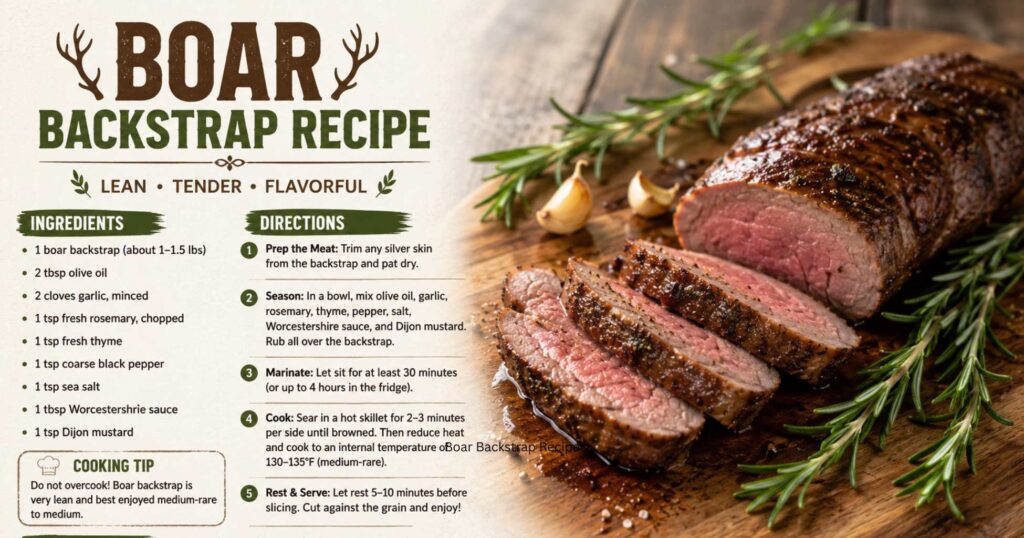
This Boar Backstrap Recipe turns a lean, underrated cut into the centerpiece of your weeknight table. Picture tender medallions with a smoky sear, a glossy garlic-butter pan sauce, and a rosy pink center. The best part is how easy it comes together. A quick marinade, a hot skillet, and a short stint in the oven deliver fork-tender results in under 40 minutes from prep to plate.
This particular boar backstrap recipe works for both first-timers and seasoned cooks alike. Wild boar cooking used to feel like something reserved for hunters and specialty restaurants. That’s changed. Ethically sourced boar shows up in more butcher shops and online meat markets every year, and it cooks almost exactly like pork tenderloin, just with deeper flavor. If you’ve tried our Venison Backstrap with Garlic Butter before, think of this as its bolder, smokier cousin.
What Is Boar Backstrap?
The backstrap is the long loin muscle that runs along the spine of a wild boar. It earns its name because it stretches down the animal’s back like a strap. Despite the rustic name, it’s actually one of the most tender cuts you’ll find on a hog, wild or domestic. Butchers prize it precisely because it doesn’t need long braising or heavy tenderizing.
People often assume game meat tastes gamey or tough, but a well-handled wild boar loin recipe proves otherwise. Cooked properly, the meat is clean-tasting and just a touch sweet, closer to pork tenderloin than venison. That’s what makes this cut such a great entry point if you’ve never cooked wild game before. Once you taste a properly rested slice, you’ll understand why hunters treat it as the prize cut of the whole animal.
Why You’ll Love This Boar Backstrap Recipe
The magic here is contrast: a deep golden crust on the outside, a rosy and tender center on the inside. A short marinade does most of the heavy lifting, layering in garlic, rosemary, and a bright hit of citrus. You don’t need hours of prep or a long ingredient list to get restaurant-quality results at home.
This boar backstrap recipe also delivers on presentation, since the sliced medallions plate beautifully with almost no extra effort. There’s also a practical upside. Wild game dishes at restaurants can carry a steep price tag, so cooking this at home saves real money without sacrificing flavor. You control every ingredient too, from the type of oil you sear with to how much butter goes into the pan sauce. If you enjoyed the herb-butter finish on our Venison Backstrap, this garlic-herb boar version will feel instantly familiar while still standing on its own.
Related Post: Baking Soda Trick
How to Make Boar Backstrap Recipe
This meal comes together in three simple stages: marinate, sear, and roast. You’ll marinate the meat first to build flavor and lock in moisture, then sear it hard in a cast iron boar recipe style skillet to form a deep, caramelized crust. A short oven finish brings it to temperature gently, so the exterior doesn’t overcook while you wait for the center to catch up.
Every good boar backstrap recipe follows roughly this same rhythm, even if the seasoning changes from one cook to the next. Budget about 15 minutes for prep, another 15 to 20 minutes for actual cooking, and a full 10 minutes of resting before you slice. That resting step matters more than people expect. It’s a simple method with a steakhouse-level payoff, and once you’ve made it once, you’ll have the rhythm down for good.
Quick Overview
Marinate for 20 to 30 minutes, sear for a few minutes per side, roast briefly, then rest before slicing. That’s the entire arc of this recipe, and it’s forgiving enough for a weeknight even if you’ve never handled wild game before.
Key Ingredients for Boar Backstrap Recipe
Here’s everything you need for four servings:
- 1 to 1.5 lb boar backstrap, trimmed of silver skin
- 2 Tbsp olive oil
- 1 Tbsp lemon juice or red wine vinegar
- 3 garlic cloves, minced
- 1 tsp Dijon mustard
- 1 tsp kosher salt
- ½ tsp black pepper, freshly ground
- 1 tsp smoked paprika
- 1 tsp fresh rosemary, minced (or ½ tsp dried)
- 1 tsp fresh thyme leaves (or ½ tsp dried)
- 2 Tbsp unsalted butter, for finishing
- ¼ cup low-sodium stock (game, chicken, or beef), for the pan sauce
- Optional garnish: lemon zest, fresh parsley, flaky salt
Smoked paprika boar seasoning is what gives this dish its subtle campfire note, so don’t skip it even if your spice drawer is running low on other options.
Step-by-Step Instructions
- Trim and pat dry. Remove any silver skin with a sharp knife, then pat the meat completely dry. Dry meat browns better, period.
- Marinate briefly. Whisk together the olive oil, lemon juice, garlic, Dijon, salt, pepper, smoked paprika, rosemary, and thyme. Coat the backstrap and let it rest at room temperature for 20 to 30 minutes, or refrigerate up to 4 hours for a deeper herb marinade for wild boar flavor.
- Preheat and prep the pan. Set your oven to 400°F (200°C). Heat a large oven-safe skillet, cast iron works best, over medium-high heat until it’s very hot.
- Sear for crust. Let excess marinade drip off, then sear the meat for 2 to 3 minutes per side until a deep brown crust forms. This is classic sear then oven finish technique, and it’s what separates a flat, gray piece of meat from one with real depth.
- Roast to finish. Slide the skillet into the oven and roast for 5 to 10 minutes. Pull it once the internal temperature for wild boar hits 140°F to 145°F for medium doneness.
- Butter baste and rest. Move the backstrap to a plate. Add butter and stock to the hot skillet, scrape up the browned bits, and simmer briefly to build a garlic butter pan sauce. Tent the meat loosely with foil and let it rest 8 to 10 minutes.
- Slice and finish. Slice against the grain into medallions about half an inch thick. Spoon extra pan sauce over the top and finish with parsley, lemon zest, and flaky salt.
What to Serve Boar Backstrap With
Pairing sides well is what turns this boar backstrap recipe into a full, memorable meal instead of just a piece of meat on a plate. This dish plays well with rich, starchy sides that can soak up the pan sauce. Creamy mashed potatoes or buttery polenta both work beautifully, and roasted vegetables like carrots, Brussels sprouts, or asparagus add welcome texture and color to the plate.
For contrast, try a bright salad with arugula, shaved fennel, and a citrus vinaigrette to cut through the richness. Crusty bread or garlic butter rolls are never a bad idea either, especially if you tend to lick the plate clean. On the drink side, a medium-bodied red like Barbera or Chianti complements the herb and garlic notes without overpowering the lean game meat flavor.
Top Tips for Perfecting Boar Backstrap Recipe
Mastering this boar backstrap recipe really comes down to a handful of small habits. Small technique choices make a bigger difference than fancy equipment ever will. Getting the sear right, timing your salt correctly, and pulling the meat at the right internal temperature are the three things that separate a good result from a forgettable one.
None of these tips require special skills, just attention at the right moments. Read through them once before you start cooking so you’re not scrambling mid-recipe.
Searing Secrets
A great sear comes down to heat, dryness, and patience, and it’s the foundation of any good pan-seared wild boar dish.
Start with a dry surface
Moisture is the enemy of browning, so pat the meat thoroughly before it touches the pan.
High heat, short time
Go for a deep brown crust quickly, then let the oven finish the job so the outside doesn’t overcook while you wait.
Don’t crowd the pan
If your skillet is small, sear in batches. Crowding drops the pan’s temperature and steams the meat instead of browning it.
Marinade and Seasoning
The right marinade adds flavor without masking the natural taste of the boar loin marinade base.
Acid and aromatics matter
A splash of lemon juice or vinegar brightens the richness, while garlic and herbs add depth without taking over.
Salt timing
Season the marinade well so salt penetrates during the rest, and avoid adding more salt once the meat hits the pan.
Flavor swaps
Try smoked sea salt, a touch of honey, or a pinch of crushed juniper for a forest-fresh, rustic game meat recipes twist.
Temperature and Doneness
Lean cuts like this one turn tough fast if you overcook them, so a thermometer isn’t optional here, it’s essential. Pull the meat at 140°F to 145°F, then let carryover cooking do the rest. Expect the internal temperature to climb another 3 to 5 degrees while it rests, so plan for that rise instead of chasing a higher number on the stove.
Common Mistakes to Avoid
Skipping the rest is the most common misstep. Resting lets the juices redistribute, and slicing too soon sends them onto the cutting board instead of into your dinner. Over-marinating is another trap; acidic marinades can toughen the exterior if you leave the meat sitting too long, so keep it to a few hours at most. Finally, watch for a weak sear. A pale crust means muted flavor, so preheat thoroughly and resist the urge to move the meat too early.
Storing and Reheating Tips
Leftovers from this boar backstrap recipe hold up surprisingly well if you store and reheat them the right way. The key is protecting moisture, since this cut has very little fat to fall back on if you’re careless with heat.
Whether you’re refrigerating tonight’s extras or freezing a larger batch for later, a little planning now saves you from a dry, disappointing reheat down the road.
Refrigeration
Place cooled slices and pan sauce in an airtight container and refrigerate for up to 3 days. When you’re ready to eat, reheat gently in a covered skillet over low heat with a splash of stock or water. Skip the microwave on high power, since it tends to dry the meat out fast.
Freezing
For longer storage, freeze the backstrap whole and unsliced, wrapped tightly in plastic and then foil, for up to 2 months. Thaw it overnight in the refrigerator before reheating. Warm it in a 275°F oven, covered, with a few spoonfuls of stock for moisture, for about 10 to 15 minutes.
Table: Health Benefits of Boar Backstrap
Beyond flavor, this cut brings some solid nutritional upside to the table, especially if you’re looking for protein-rich game meat options.
| Benefit | Why It Helps | What It Means for You |
| Lean protein | Naturally lean with high protein per serving | Supports muscle repair and keeps you satisfied without excess fat |
| Mineral rich | Contains iron, zinc, and selenium | Aids energy levels, immune support, and antioxidant defenses |
| Flavorful yet clean | Robust taste without heavy marinades or breading | Big flavor from straightforward, whole ingredients |
| Portion friendly | Cook once, slice into medallions | Easy to control servings and pack for next-day lunches |
| Versatile | Works with herb, citrus, or spice rubs | Adapts to many cuisines, from rustic Italian to modern American |
Boar Backstrap Recipe
A fast, elegant wild game dinner: tender boar backstrap seared to a deep crust, finished briefly in the oven, and served with a buttery garlic-herb pan sauce. Ready in about 45 minutes, with minimal cleanup and steakhouse flavor.
Prep Time: 25 minutes | Cook Time: 20 minutes | Total Time: 45 minutes Course: Main Course | Cuisine: American | Servings: 4 | Calories: 380 kcal
Equipment
- Oven-safe skillet (cast iron preferred)
- Instant-read thermometer
- Mixing bowl and whisk
- Tongs
- Chef’s knife and cutting board
- Measuring cups and spoons
- Aluminum foil, for resting
Ingredients
Marinade & Meat
- 1–1.5 lb boar backstrap, trimmed of silver skin
- 2 Tbsp olive oil
- 1 Tbsp lemon juice or red wine vinegar
- 3 cloves garlic, minced
- 1 tsp Dijon mustard
- 1 tsp kosher salt
- ½ tsp freshly ground black pepper
- 1 tsp smoked paprika
- 1 tsp fresh rosemary, minced (or ½ tsp dried)
- 1 tsp fresh thyme leaves (or ½ tsp dried)
Pan & Finish
- 2 Tbsp unsalted butter
- ¼ cup low-sodium stock (game, chicken, or beef)
- Optional garnish: chopped parsley, lemon zest, flaky salt
Instructions
- Trim off any silver skin and pat the backstrap completely dry.
- Whisk the marinade ingredients together, coat the meat, and rest 20–30 minutes at room temperature (or refrigerate up to 4 hours).
- Preheat the oven to 400°F (200°C) and heat an oven-safe skillet until very hot.
- Sear the meat 2–3 minutes per side until deeply browned, including the edges.
- Roast 5–10 minutes, until internal temperature reaches 140–145°F (60–63°C).
- Rest the meat on a plate, tented with foil. Make the pan sauce with butter, stock, and the browned bits.
- Slice against the grain into medallions, spoon over the sauce, and garnish before serving.
Notes
Don’t overcook: this is a lean cut, so pull it early and trust the rest. Dry meat browns better, so don’t rush the pat-down step. For a flavor swap, try a splash of balsamic in the sauce or swap the rosemary and thyme for sage. Refrigerate leftovers with sauce for up to 3 days, or freeze unsliced for up to 2 months.
Conclusion
This Boar Backstrap Recipe earns a regular spot in the dinner rotation because it turns a lean, high-quality cut into a tender, sauce-glossed centerpiece without much fuss. A simple marinade, a hard sear, and a proper rest get you steakhouse results without the steakhouse bill.
If you’ve never cooked wild game before, this is the easiest place to start. And if you’re already a fan, the garlic-herb combination here will only deepen your appreciation for how good a well-handled boar loin can be. Slice it up, spoon over that pan sauce, and watch the plates come back clean.