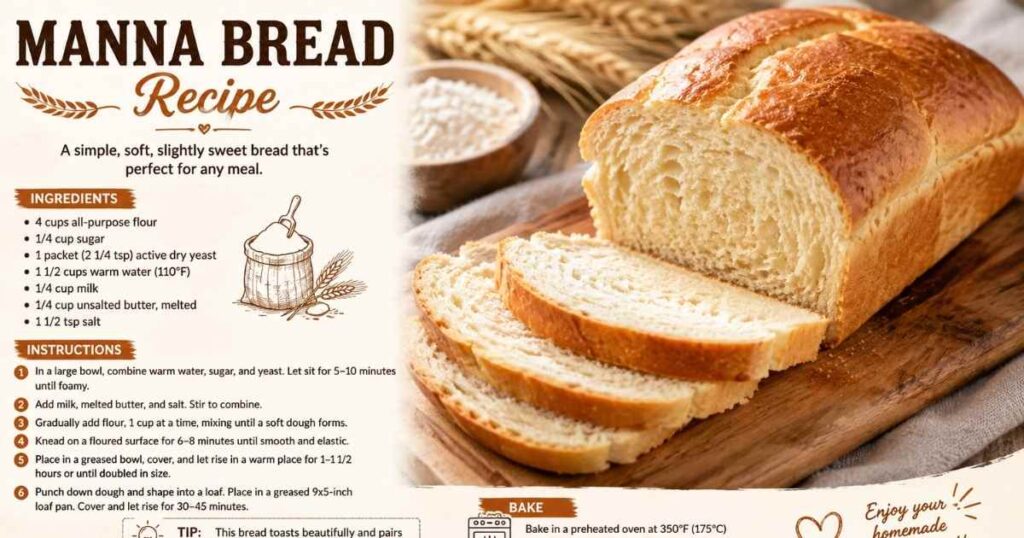
If you’ve ever wanted to bake something that’s both deeply nourishing and rooted in thousands of years of history, this manna bread recipe is exactly that. Made from whole grains, natural sweeteners, and just a handful of pantry staples, this ancient-style loaf is the opposite of the over-processed bread lining grocery store shelves today. It’s dense, subtly sweet, and genuinely satisfying and it’s far easier to make at home than you might think.
Whether you’re drawn to it for health reasons, historical curiosity, or simply because you love wholesome homemade bread, this guide walks you through everything from choosing your grains to storing your finished loaf.
What is Manna Bread?
Manna bread is an ancient-style, whole grain loaf made with minimal ingredients and no artificial additives. At its core, it’s flour (or sprouted grains), water, and a natural sweetener like honey or dates nothing more, nothing less.
Unlike fluffy commercial sandwich bread, manna bread has a dense, slightly chewy crumb and a mild sweetness that comes from the grains themselves. It contains no preservatives, no refined flour, and no industrial processing. That’s precisely what makes it stand out. It’s a loaf you can feel genuinely good about eating.
Related Post: Pink Salt Trick: Does It Really Work? Benefits & Recipe
History of Manna Bread
The roots of manna bread stretch back thousands of years. In Hebrew tradition and ancient biblical writings, “manna” was described as a life-sustaining food simple, pure, and nourishing. Ancient peoples, including the Essenes (a Jewish sect believed to have lived near the Dead Sea), are thought to have made a similar bread from sprouted grains ground with water and dried in the sun.
Modern bakers eventually revived this concept, adapting it to home ovens while honoring its original spirit: whole grains, natural ingredients, and minimal processing. Today, manna bread holds appeal both for its historical significance and for its impressive nutritional profile.
Ingredients for Manna Bread Recipe
You don’t need much to make a great manna bread. Here’s what the classic recipe calls for:
| Ingredient | Amount | Notes |
| Whole wheat flour | 2 cups | Or a mix of spelt, barley, and oats |
| Water | 1 cup | Or milk for a softer texture |
| Honey, maple syrup, or mashed dates | 2 tablespoons | Natural sweetener of your choice |
| Salt | 1 teaspoon | Optional but recommended |
| Nuts, seeds, or dried fruits | To taste | Optional add-ins for flavor and nutrition |
Using a mix of whole grains such as spelt, barley, and oats alongside wheat adds complexity in both flavor and nutrition. If you can source freshly milled or minimally processed grain, even better.
Step-by-Step Manna Bread Recipe
1. Mix Dry Ingredients
In a large mixing bowl, combine your flour, salt, and any seeds, nuts, or grains you’re adding. Stir well to distribute everything evenly before the wet ingredients go in.
2. Add Liquid Ingredients
Pour in your water (or milk) and natural sweetener gradually, mixing as you go. You’re aiming for a soft, slightly sticky dough that holds together without being wet. If using milk, expect a noticeably softer, richer crumb.
3. Knead the Dough
Turn the dough out onto a lightly floured surface and knead for 5 to 10 minutes. You’re looking for a smooth, elastic texture the dough should spring back slightly when you press it. Don’t rush this step; it builds structure in the bread.
4. Shape the Dough
Shape the dough into a loaf or round, depending on your preference and what pan you have available. A standard loaf pan works well, but a free-form round baked on a sheet pan is equally traditional.
5. Bake
Preheat your oven to 175°C (350°F). Bake for 25 to 35 minutes, or until the top is golden brown and the loaf sounds hollow when tapped on the bottom. Every oven runs slightly differently, so start checking at the 25-minute mark.
6. Cool
This is non-negotiable: let the bread cool completely before slicing. Cutting into a hot dense loaf compresses the crumb and ruins the texture. Give it at least 30 to 45 minutes on a wire rack.
Tips for Perfect Manna Bread Recipe
- Don’t over-knead. Stop once the dough is smooth and elastic excessive kneading makes the crumb tougher.
- Mix your grains. A blend of wheat, spelt, and oats gives more complex flavor and higher fiber content than single-grain loaves.
- Use milk instead of water if you want a softer, richer texture.
- Always cool fully before cutting. The interior continues setting as it cools.
- Add a drizzle of honey before serving to bring out the natural sweetness of the grains.
- Use an oven thermometer. Actual oven temperatures often differ from the dial consistent heat matters for even baking.
Serving Ideas
Manna bread is remarkably versatile at the table:
- Toasted with nut butter and a drizzle of honey for breakfast
- As a base for open-faced sandwiches with avocado, cheese, or vegetables
- Alongside hearty soups, stews, or lentil dishes
- With hummus or olive oil as a wholesome snack
- In thin slices with fruit preserves or natural jam
Its neutral, slightly sweet flavor makes it equally at home with savory and sweet toppings.
Variations of Manna Bread
Gluten-Free Version
Replace the whole wheat flour with almond flour or certified gluten-free oat flour. Note that the texture will be denser and crumblier adding a flax egg (1 tablespoon ground flaxseed + 3 tablespoons water) helps bind the dough.
Sweet Version
Fold in a handful of raisins, chopped Medjool dates, or dried apricots before shaping. You can also add a pinch of cinnamon or cardamom for warmth. This version pairs beautifully with morning tea or coffee.
Savory Version
Add 1 to 2 teaspoons of dried rosemary, thyme, or garlic powder to the dry ingredients. Sunflower seeds or pumpkin seeds add both crunch and nutrition to the savory variation.
No-Yeast Version
This recipe already skips commercial yeast by default. For the densest, most traditionally styled loaf, skip any leavening entirely and embrace the compact crumb that’s authentic manna bread in its purest form.
Manna Bread vs Regular Bread
| Feature | Manna Bread | Regular Commercial Bread |
| Main ingredient | Whole grains | Refined white flour |
| Sweetener | Honey, dates, maple syrup | High-fructose corn syrup |
| Processing | Minimal, homemade | Industrial, highly processed |
| Preservatives | None (when homemade) | Often contains multiple additives |
| Fiber content | High | Low to moderate |
| Texture | Dense and chewy | Light and airy |
| Shelf life | 2–3 days room temp | Weeks (due to preservatives) |
The nutritional gap is significant. Manna bread wins on fiber, minerals, and ingredient transparency every time.
Health Benefits of Manna Bread Recipe
When made with whole grain flour and natural ingredients, manna bread offers genuine nutritional advantages:
- High dietary fiber from whole wheat, spelt, barley, or oat flour supporting digestive health and satiety
- Longer-lasting energy thanks to complex carbohydrates that digest slowly
- Natural minerals including magnesium, zinc, and B vitamins present in whole grains
- No artificial additives no preservatives, no emulsifiers, no synthetic dyes
- Lower glycemic impact compared to white bread, especially when made with sprouted or mixed grains
- Supports gut health thanks to the fiber content and minimal processing
Modern Variations
Home bakers have taken the original concept and run with it in some genuinely creative directions:
- Sprouted grain manna bread using whole wheat berries that are soaked, sprouted, and ground into a paste before baking. This is the most traditional and nutritionally potent version.
- Multigrain manna bread combining sprouted wheat, rye, and barley for a complex, deeply earthy flavor.
- Date and walnut manna bread a naturally sweet variation with Medjool dates and roughly chopped walnuts folded through.
- Spelt manna bread spelt has a slightly nuttier flavor and is easier for some people to digest than modern wheat.
Why Manna Bread is Still Relevant Today
In an era when most bread is baked in industrial factories and packed with ingredients you can’t pronounce, manna bread offers something genuinely different. It puts you back in control of what goes into your food.
There’s also a growing body of evidence supporting the benefits of minimally processed whole grain foods for long-term health. Manna bread fits squarely into that picture. It’s not a trend it’s a return to the way bread was always meant to be made.
Choosing the Right Grains for Manna Bread
Grain selection shapes everything about the finished loaf. Here’s a quick guide:
- Whole wheat flour the most common base; reliable, nutty, and high in fiber
- Spelt milder and slightly sweeter than wheat; easier to digest for many people
- Barley adds a distinctive earthy note and a chewy texture
- Oats rolled oats folded into the dough add softness and a mild sweetness
- Rye bold and complex; use in small amounts unless you want a strongly flavored loaf
Mixing two or three grains gives better flavor balance and nutritional breadth than relying on a single grain alone.
Sweeteners and Natural Flavors
The sweetener you choose subtly defines the character of your loaf:
- Raw honey classic and floral, with a gentle warmth
- Medjool dates (mashed) the most traditional choice; deeply sweet and caramel-like
- Maple syrup slightly lighter in flavor, works beautifully with oat-based variations
- Cinnamon, nutmeg, or cardamom aromatic spices that complement the natural sweetness without overpowering it
Keep additions modest. The grain should still be the dominant flavor.
Tools and Equipment You’ll Need
You don’t need a professional setup to bake manna bread:
- Large mixing bowl
- Wooden spoon or silicone spatula
- Standard loaf pan or baking sheet
- Oven thermometer (highly recommended)
- Wire cooling rack
- Bench scraper or rolling pin (optional)
That’s it. No stand mixer, no proofing baskets, no specialty equipment required.
Common Mistakes and How to Avoid Them
| Mistake | What Goes Wrong | Fix |
| Too much water | Dough becomes sticky and won’t hold shape | Add flour 1 tablespoon at a time until dough comes together |
| Over-baking | Bread turns dry and crumbly | Check at 25 minutes; tent with foil if browning too fast |
| Cutting while hot | Crumb compresses and becomes gummy | Wait at least 30–45 minutes after removing from oven |
| Using only refined flour | Loses the nutritional point entirely | Always use whole grain flour as the base |
| Under-kneading | Dense, underdeveloped texture | Knead a full 8–10 minutes until smooth and elastic |
Creative Manna Bread Variations
Once you’ve mastered the base loaf, try these:
- Nutty delight fold in chopped walnuts or almonds before shaping for crunch and healthy fats
- Fruity twist raisins, dried cherries, or chopped figs add pockets of natural sweetness
- Herb and seed sunflower seeds with rosemary and a touch of garlic make a stunning savory version
- Mini loaves or rolls portion the dough into individual servings for snacks, lunchboxes, or gifts
Pairing Manna Bread with Meals
| Meal | Best Pairing |
| Breakfast | Toasted with honey, almond butter, or fruit preserves |
| Lunch | Open-faced sandwich with avocado, tomato, or cheese |
| Dinner | Alongside soups, stews, or roasted vegetable dishes |
| Snack | With hummus, tahini, or a drizzle of extra virgin olive oil |
Its mild, slightly earthy flavor doesn’t compete with other ingredients it complements them.
Baking Manna Bread with Kids
Manna bread is one of the best baking projects to do with children. The dough is forgiving, the steps are simple, and the sensory experience particularly kneading is genuinely fun for small hands. Kids can help measure ingredients, pour, mix, and shape, and there’s a real sense of accomplishment when the finished loaf comes out of the oven.
It’s also a natural conversation starter about where food comes from and how people ate throughout history. A loaf of manna bread is, in that sense, a little history lesson you can eat.
Storing and Reheating Manna Bread Recipe
Storage Tips
| Method | Duration | Notes |
| Room temperature | 2–3 days | Wrap in a clean cloth or beeswax wrap; avoid plastic |
| Refrigerator | Up to 1 week | Wrap tightly to prevent drying out |
| Freezer | Up to 2 months | Slice before freezing for easy single-serving portions |
To reheat, wrap a slice in a damp paper towel and microwave for 20–30 seconds, or toast lightly in a toaster or pan. Avoid reheating the whole loaf from frozen slice first.
Conclusion
Manna Bread Recipe is proof that the simplest recipes are often the most satisfying. With just a handful of whole ingredients, a bit of kneading, and half an hour in the oven, you end up with something genuinely nourishing a loaf that’s rich in fiber, free from additives, and grounded in thousands of years of baking tradition. It’s not trying to be fluffy or Instagram-ready. It’s honest, wholesome food.
Whether you make the base recipe as written, fold in some dates and walnuts, or go the sprouted grain route, the result is a bread worth making regularly. Once you’ve tasted a warm slice with a drizzle of honey, you’ll understand why this ancient loaf has survived the test of time and why so many home bakers keep coming back to it. Give it a try and make it your own.