If you’ve been scrolling through wellness blogs or stumbled across a viral video claiming a famous neurosurgeon created a “7-second honey ritual” for memory and brain health, you’re not alone. Millions of people have searched for the Ben Carson honey recipe, curious whether a simple pantry mixture could genuinely support cognitive function. The good news? The recipe itself is real, honest, and easy to make. The marketing around it, however, deserves a closer look.
In this guide, you’ll get the full picture what the recipe actually contains, why honey has earned a legitimate spot in brain-health conversations, how to prepare it at home, and which type of honey science currently points to as the most researched for memory support.
What Is the Ben Carson Honey Recipe?
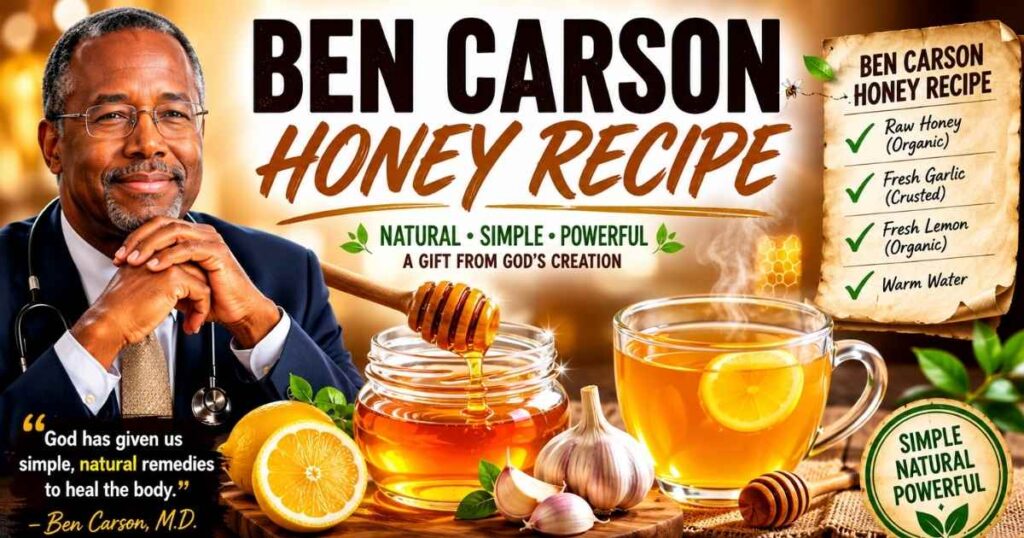
The Ben Carson honey recipe is a simple, honey-based wellness mixture that went viral in late 2025 through social media ads and affiliate blogs. Most versions describe it as a daily morning ritual involving raw honey combined with pantry spices such as cinnamon or cayenne pepper, taken by the spoonful and held briefly under the tongue before swallowing.
It is sometimes called:
- Dr Ben Carson’s honey recipe
- Dr Ben Carson’s 7-second honey ritual
- Dr Ben Carson’s honey formula
- Ben Carson Asian honey protocol
Despite the different names, the core recipe remains straightforward raw honey mixed with one or two supporting ingredients, consumed in seconds each morning.
Important fact-check: Multiple independent fact-checkers, including AFP and Lead Stories, have confirmed that viral videos using Dr. Ben Carson’s likeness were deepfake-manipulated content. Representatives for Dr. Carson’s organization have publicly stated he has never endorsed or heard of this product. Treat his name as a marketing label, not a clinical endorsement. The ingredients, however, stand on their own merits.
Related POST: Easy Canaan Honey Trick Recipe You Can Make in 5 Minutes
Understanding the Honey and Red Spice Tradition
Long before this recipe went viral, combining honey with warming spices was a staple in traditional food cultures across Asia, the Middle East, and South Asia. Ayurvedic practice has paired raw honey with warming herbs for centuries. Southeast Asian wellness traditions have long used wild forest honey in daily routines.
The “honey and red spice” format typically raw honey with cayenne pepper, cinnamon, or turmeric works from a flavor standpoint because honey’s natural sweetness balances the heat of spices, creating a smooth and pleasant mixture. From a nutritional standpoint, each ingredient brings documented bioactive compounds to the blend.
This tradition explains why the recipe resonated so quickly with so many people. It didn’t feel new. It felt familiar.
Why Honey Appears in Brain-Health Discussions
Honey has earned genuine attention from researchers studying cognitive function. According to a review published on PubMed (NIH), honey particularly certain varieties has been shown in animal and early human studies to:
- Reduce oxidative stress in the brain
- Increase brain-derived neurotrophic factor (BDNF), a protein linked to learning and memory
- Support the cholinergic system, which plays a key role in memory processing
- Improve hippocampal morphology in memory-related brain regions
The brain consumes roughly 20% of the body’s oxygen despite representing only 2% of body mass, making it highly vulnerable to oxidative damage. Honey’s natural flavonoids and phenolic acids compounds like catechin, kaempferol, gallic acid, and caffeic acid are studied for their antioxidant and anti-inflammatory properties.
None of this means a spoonful of honey reverses Alzheimer’s disease. No such clinical evidence exists. But it does explain why researchers and wellness communities continue to discuss raw honey in the context of brain health.
Dr Ben Carson’s Honey Recipe and the Viral Ritual
What Is the “7 Second Honey Ritual”?
The phrase “Dr Ben Carson’s 7 second honey ritual” emerged from a wave of online ads in late 2025. The “7 seconds” refers to holding a small spoonful of honey under the tongue briefly before swallowing a method used in sublingual consumption to allow nutrients to absorb directly into the bloodstream before passing through digestion.
The process looks like this:
- Measure one teaspoon of raw honey into a small bowl or directly onto a spoon
- Add your chosen supporting ingredient (cinnamon, cayenne, or lemon juice)
- Stir until fully combined
- Place the mixture under the tongue for approximately 7 seconds
- Swallow and continue with your morning routine
The preparation genuinely takes under a minute. That simplicity two or three ingredients, no cooking, no special equipment is exactly why it spread so quickly across social media.
Is the Ben Carson Honey Protocol Real?
Here is an honest breakdown:
| Claim | Reality |
| Dr. Ben Carson created this recipe | False. No verified endorsement exists. His team has denied involvement. |
| The recipe uses real ingredients | True. Raw honey, cinnamon, and lemon are well-studied pantry staples. |
| Honey can support brain health | Partially supported. Preclinical and early human studies show promise, especially for certain honey varieties. |
| This recipe reverses memory loss or cures Alzheimer’s | False. No clinical evidence supports this claim. |
| The daily ritual is worth trying as a food habit | Reasonable. A teaspoon of quality honey each morning is a low-risk, pleasant wellness practice. |
The term “Ben Carson honey scam” appears in searches precisely because of the exaggerated medical claims attached to the marketing. Strip away the hype, and what remains is a simple honey-based morning habit using quality ingredients worth trying on its own terms.
Ingredients Used in the Honey Memory Ritual
Raw Honey and Red Spice for Memory Loss
The most widely shared version of the Ben Carson honey recipe uses three core ingredients:
- Raw honey the foundation of the recipe, valued for its polyphenol content, natural antioxidants, and energy-supporting natural sugars
- Ceylon cinnamon chosen specifically over cassia cinnamon for daily use; studied for its effects on blood sugar regulation and antioxidant activity
- Fresh lemon juice adds vitamin C, brightens the flavor, and supports the body’s natural antioxidant defenses
Some variations add a pinch of cayenne pepper for warmth, or swap lemon for apple cider vinegar. The “Ben Carson Asian honey protocol” version often includes turmeric and a pinch of black pepper black pepper activates curcumin absorption by up to 2,000%, making it a meaningful addition when turmeric is used.
Choosing the Right Honey
Honey quality makes a meaningful difference in this recipe. Here is a comparison of the most popular options:
| Honey Type | Flavor | Research Focus | Best For |
| Tualang Honey | Complex, slightly tangy | Strongest brain-health evidence in published studies | Memory support rituals |
| Manuka Honey | Rich, bold, earthy | Antibacterial, immune, and cognitive research | Daily wellness |
| Raw Wildflower Honey | Floral, light | General antioxidant support | Everyday use |
| Clover Honey | Mild, smooth | General use | Beginners |
For the Ben Carson honey recipe, Tualang or raw wildflower honey are the most appropriate choices. Both retain their naturally occurring bioactive compounds, mix smoothly with spices, and offer the flavor profile the recipe needs. Always choose minimally processed, unfiltered raw honey over commercial varieties that have been heat-treated.
How to Make the Ben Carson Honey Recipe
Step-by-Step Ben Carson Honey Recipe
Prep time: 5 minutes | Servings: Makes approximately 30 daily doses (stored batch)
Ingredients
- 6 tablespoons raw honey (Tualang or raw wildflower recommended)
- ½ teaspoon Ceylon cinnamon (not cassia)
- 1 teaspoon fresh lemon juice
Equipment
- Small glass bowl
- Wooden spoon or silicone spatula
- Small airtight glass jar with lid
Method
- Add the raw honey to a clean, dry glass bowl. Let it settle for a moment so you can see its natural texture.
- Measure the Ceylon cinnamon and add it directly to the honey.
- Add the fresh lemon juice. Do not use boiling or very hot liquids near this mixture high heat degrades honey’s natural enzymes.
- Stir slowly in gentle circles with a wooden spoon until the cinnamon and lemon are fully incorporated and the mixture is smooth.
- Transfer to a small airtight glass jar. Seal tightly, label with today’s date, and store at room temperature away from direct sunlight.
- Each morning before breakfast, take one level teaspoon. Hold it briefly under your tongue for approximately 7 seconds, then swallow. Eat breakfast as normal.
Notes
- Do not exceed two teaspoons daily. One teaspoon (approximately 21 calories, 5.7g natural sugar) fits comfortably within a balanced diet for most healthy adults.
- Always use a dry spoon. Introducing moisture into your stored jar can cause fermentation.
- If honey crystallizes, place the sealed jar in a bowl of warm water for a few minutes. Never microwave.
- Do not give honey to infants under one year old.
- People managing diabetes or blood sugar conditions should consult a healthcare professional before adding daily honey to their routine.
- For a variation, stir one teaspoon into a warm cup of herbal tea instead of taking it directly.
Tips for Best Results
Use Tualang or raw wildflower honey. Minimally processed honey retains more of the naturally occurring flavonoids and phenolic acids that researchers study for cognitive support.
Stick with Ceylon cinnamon. Cassia cinnamon contains higher levels of coumarin, which can be a concern at daily doses. Ceylon is the safer and more refined choice for long-term use.
Be consistent. A one-off teaspoon won’t accomplish much. The antioxidant benefits of any dietary habit accumulate gradually. Set a morning reminder and treat this as a routine, not a cure.
Pair it with a balanced diet. The Mediterranean dietary pattern rich in vegetables, whole grains, oily fish, nuts, and olive oil has the strongest human evidence for long-term cognitive health. This honey ritual works best as one honest part of a broader healthy lifestyle.
Honey Trick Recipe
The “honey trick” is a broad term covering several viral honey-based wellness rituals, of which the Ben Carson honey recipe is the most searched. The general concept: take a small amount of raw honey each morning, often with a warming or antioxidant-rich ingredient, to support daily energy, reduce mental fog, or build a mindful morning habit.
Common honey trick recipe variations include raw honey with warm water and lemon, honey with turmeric and black pepper (a golden honey blend), and honey stirred into herbal tea before bed for sleep support. All share the same principle: a small, daily dose of quality honey used consistently as a food practice.
Tualang Honey
Tualang honey is harvested from wild hives built on the Koompassia excelsa tree one of the tallest trees in Malaysia’s tropical rainforests. Harvesting is physically demanding, with hives often located more than 100 feet above the ground.
What makes Tualang honey scientifically notable is its unusually high concentration of polyphenols, flavonoids, and phenolic acids compared to most commercially available honeys. A comprehensive NIH-indexed review found that Tualang honey supplementation was associated with improved memory performance, increased BDNF concentration, and reduced neurological oxidative stress across multiple independent studies.
In human clinical trials, Tualang honey supplementation improved immediate memory in postmenopausal women and enhanced learning performance in patients with schizophrenia. These are published findings, not marketing claims.
Its flavor is darker and more complex than standard supermarket honey, with a slightly tangy edge that reflects the diverse tropical flora its bees forage from. Most people find it noticeably different from commercial honey but pleasant.
Asian Honey Protocol Recipe
The Asian honey protocol recipe is closely related to the Ben Carson honey recipe and is often described as its more complex variant. Where the standard Ben Carson version uses honey, cinnamon, and lemon, the Asian honey protocol adds turmeric and grated fresh ginger.
The pairing has nutritional logic behind it. Curcumin (from turmeric) has been studied in a UCLA clinical trial and found to improve memory and attention in adults with mild age-related memory complaints. Black pepper’s piperine dramatically boosts curcumin bioavailability. Ginger contributes its own anti-inflammatory phenolic compounds.
To make the Asian honey protocol version, simply add ¼ teaspoon turmeric and a small pinch of black pepper to the base recipe. The flavor becomes bolder and earthier closer to a wellness shot than a sweet morning treat.
How to Use Honey for Brain Booster
Using honey as part of a brain-health routine works best when approached with realistic expectations. Here are practical, research-aligned ways to incorporate it:
- Morning ritual: One teaspoon of raw or Tualang honey before breakfast, held briefly under the tongue before swallowing
- Pre-work drink: Honey dissolved in warm (not hot) water with lemon for a quick natural energy source
- Golden honey blend: Mix honey with turmeric, black pepper, and cinnamon for a combination with multiple studied bioactive compounds
- Evening tea: A small amount of honey in herbal tea before bed may support sleep quality, which is directly tied to memory consolidation
Raw honey delivers glucose and fructose the brain’s primary fuel alongside antioxidants and bioactive compounds. That combination makes it a more nutritionally complete option than refined sugar when adding sweetness to daily routines.
Tualang Honey Where to Buy
Tualang honey is a specialty import product not typically found in standard supermarkets. Here are the most reliable sourcing options:
- Amazon: Multiple brands offer raw Tualang honey, including Health Harvest (a well-known Malaysian producer verified by independent lab testing) and Selby Honey. Look for “wild-harvested” and “minimally processed” on the label.
- Specialty online retailers: Bee-Licious Honey (US) is an authorized distributor partner for Health Harvest Tualang Honey.
- Health food stores: Some specialty natural food stores carry Malaysian wild honey; calling ahead saves time.
- What to look for: Authentic Tualang honey has a darker color, complex flavor, and should carry batch and origin information. Genuine products from Health Harvest include authenticity seals.
Honey and Brain Fog
Brain fog the feeling of mental cloudiness, slow thinking, or difficulty concentrating can have many causes, including poor sleep, oxidative stress, blood sugar swings, and low-grade chronic inflammation.
Raw honey may help address several of these mechanisms:
- Its natural glucose provides rapid, usable fuel for brain cells without the sharp crash associated with refined sugar
- Its flavonoids and phenolic acids counter oxidative stress in neural tissue
- Some research suggests honey may support better sleep quality, and quality sleep is directly tied to memory consolidation
- Antioxidant-rich diets are consistently linked to reduced cognitive decline in large observational studies
Honey is not a treatment for clinical brain fog caused by medical conditions such as thyroid disorders, sleep apnea, or long COVID. If persistent brain fog significantly affects your daily life, a healthcare provider is the right next step.
Tualang Honey Near Me
Finding Tualang honey locally can be challenging since it is a niche specialty import. These approaches work best:
- Search Amazon for “raw Tualang honey” the most reliable source for most locations
- Check Asian grocery stores or Malaysian specialty food retailers, which sometimes carry authentic wild honeys from Southeast Asia
- Look for health food stores with international specialty sections
- Some farmer’s markets with specialty honey vendors occasionally carry it; calling ahead helps
- If Tualang honey is unavailable locally, raw Manuka honey is a well-researched and widely available alternative
Tualang Honey for Memory
Ingredients
- 1 teaspoon raw Tualang honey
- ¼ teaspoon Ceylon cinnamon
- ½ teaspoon fresh lemon juice
- Optional: pinch of turmeric and pinch of black pepper
Equipment
- Small glass bowl or spoon
- Wooden spoon
- Small airtight glass jar (for batch preparation)
Method
- Combine all ingredients in a small glass bowl.
- Stir thoroughly until fully blended and smooth.
- Take one teaspoon each morning before breakfast.
- Hold briefly under the tongue for 7 seconds, then swallow.
- For batch prep: multiply ingredients by 30 and store in an airtight glass jar at room temperature for up to two months.
Notes
Tualang honey carries the strongest published evidence for memory-related outcomes among commonly available honey varieties. A PubMed-indexed review found it improved both short- and long-term memory in animal models, enhanced hippocampal neuronal proliferation, and increased BDNF concentrations. Human clinical trials in postmenopausal women showed statistically significant improvements in immediate memory scores.
Consistency matters. Treat this as a daily food habit rather than a quick fix. Allow at least four to six weeks of daily use before evaluating any subjective changes in focus or mental clarity.
When and Who Should Use the Ben Carson Honey Recipe
Who This Honey Recipe Is For
This recipe is a good fit for:
- Adults looking to build a simple, intentional morning wellness habit
- People wanting to reduce refined sugar intake while keeping a small amount of natural sweetness in their morning routine
- Those interested in antioxidant-rich foods as part of a longer-term brain-health lifestyle
- Anyone curious about the honey ritual trend who wants an honest, no-hype version of the recipe
It is not appropriate for infants under one year old, people with severe bee product allergies, or anyone seeking a replacement for medical treatment of dementia or memory disorders.
When to Use the Ben Carson Honey Recipe
Best time: First thing in the morning, before breakfast. Taking it on an empty stomach allows for maximum absorption and creates a consistent daily anchor for the habit.
Alternative timing options:
- Stirred into herbal tea 30 minutes before bed for sleep support
- Before a study session or cognitively demanding workday as a focus-supporting ritual
- After exercise, when the brain benefits from a natural glucose source for recovery
Avoid taking it with very hot liquids, as temperatures above 40°C (104°F) can degrade honey’s natural enzymes. Warm is fine; boiling is not.
Final Thoughts
The Ben Carson honey recipe, stripped of its viral marketing, is exactly what it appears to be: a simple, pleasant daily ritual using raw honey and a handful of honest pantry ingredients. The dramatic claims made in deepfake video ads do this recipe a real disservice they set impossible expectations and overshadow the legitimate, documented scientific interest in honey’s bioactive compounds, particularly varieties like Tualang.
What the research actually supports is modest and meaningful: consistent consumption of antioxidant-rich foods, quality sleep, a balanced diet, and intentional daily habits all contribute to long-term cognitive resilience. A teaspoon of quality raw honey each morning, combined with Ceylon cinnamon and fresh lemon, fits comfortably within that framework. It will not cure Alzheimer’s, and no honest source will tell you it does. But it is a real, enjoyable, low-risk food habit built from ingredients that researchers continue to find genuinely interesting and that is worth something on its own terms.